Mushroom Fields is one of the rarest biomes you can spawn beside, and its purple-grey mycelium, oversized red and brown mushrooms, and wandering mooshrooms make it look unlike anywhere else in the game. That strangeness is the whole appeal — you’re building somewhere that already feels a little magical before you place a single block.
The ideas below lean into that. Some tuck a small survival base into a mycelium mound, some hollow out the giant mushrooms themselves, and a few go full fairytale with toadstool clusters and glowing fungal manors. Every build sticks to real, current blocks, so you can copy any of them straight into a survival or creative world.
Match the wood tones and light sources to the mushroom palette and the whole thing hangs together. Here are 27 house ideas to get you started.
Survival Starters on Mycelium
1. Mycelium Turf Starter Burrow
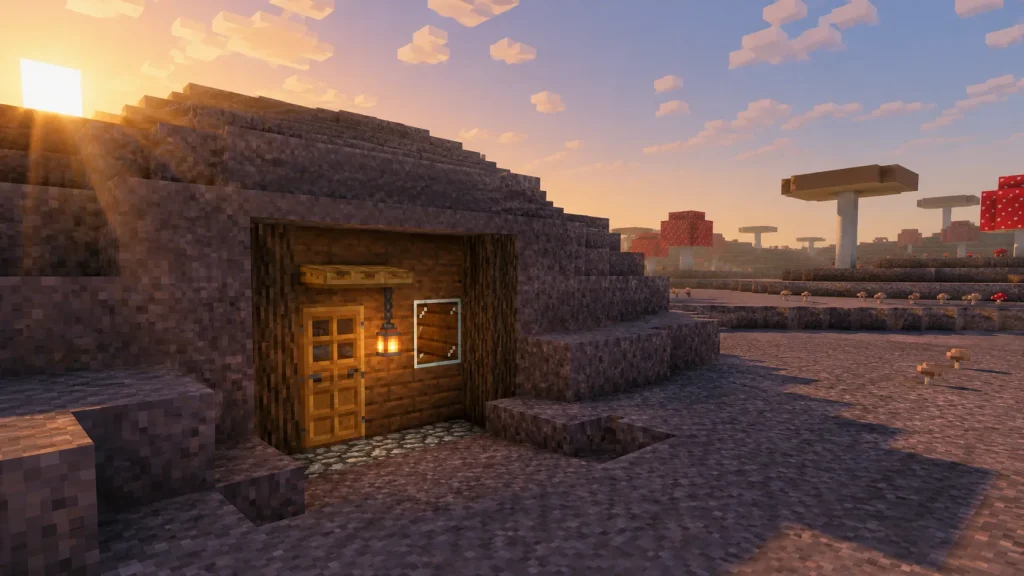
This one hides in plain sight. You carve a small home into the side of a mycelium mound so the roof is just more turf, and only the door and one window give it away.
Line the dug-out walls with spruce planks and spruce log corners, lay a cobblestone floor, and cap the entrance with an oak trapdoor as an awning above an oak door. A single glass pane brings in light, and one lantern hangs inside on a chain.
Dig two blocks into a natural slope so the mycelium sits flush over the top. It’s the cheapest first-night base here and it blends into the terrain completely.
2. Spruce-and-Stem First Night Shelter
A blocky little box that still fits the biome, built from what’s already around you. The mushroom stem gives you a pale, papery wall texture that reads very differently from normal wood.
Frame the corners with spruce logs, fill the walls with mushroom stem blocks, and pitch a low roof of spruce stairs and slabs. Use a spruce door, two glass panes, and a soul lantern out front for a cooler-toned glow.

3. Compact Mushroom Farmer’s Hut
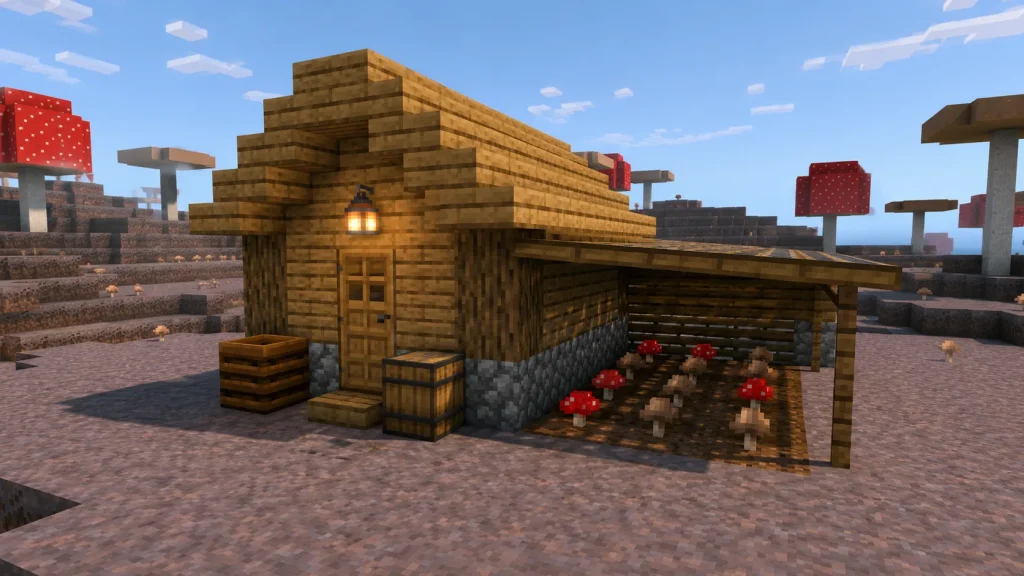
Built for someone who wants to actually farm the giant mushrooms nearby. The footprint is tiny but there’s a covered growing shelf attached to one wall.
Use cobblestone for the base course, oak planks for the walls, and an oak stair roof. Attach a small awning of oak trapdoors over a row of podzol with red and brown mushrooms planted underneath, and set a composter and a barrel by the door.
Keep the mushroom shelf shaded — the low trapdoor roof drops the light level enough to keep mushrooms placed and spreading.
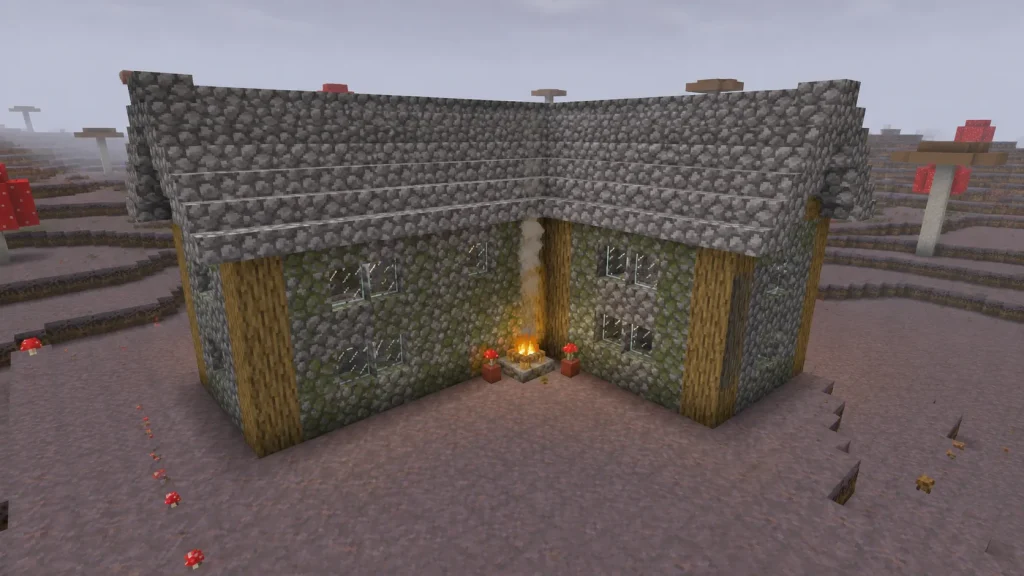
4. Cobblestone Corner Cottage
An L-shaped survival home that wraps around a small mycelium courtyard. The bend in the shape gives you a sheltered entry and a natural spot for a firepit.
Build the walls in cobblestone and mossy cobblestone mixed roughly, with stripped oak log posts on the outer corners. Roof it in cobblestone stairs, add glass pane windows, and set a campfire and two flower pots in the courtyard corner.
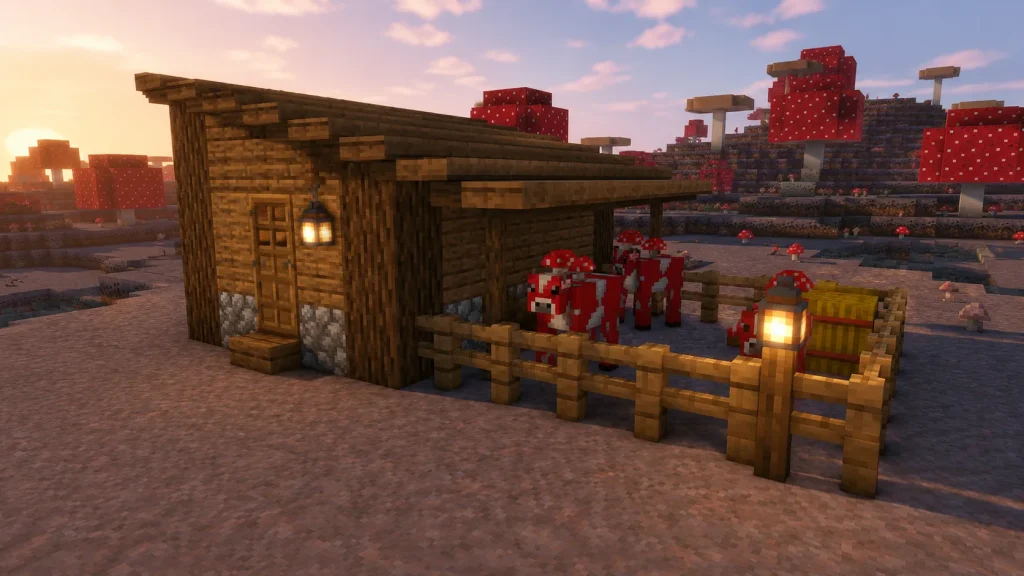
5. Mooshroom Keeper’s Lean-To
Half shelter, half animal pen, for players who fence in a couple of mooshrooms early. The house shares one wall with the pen so you can reach them without going outside.
Frame it in spruce logs with spruce plank infill and a single-pitch lean-to roof of spruce slabs. Fence the attached pen in oak fences, floor it with mycelium, and drop a hay bale feed pile and a lantern on a post at the corner.
Living Inside the Giant Mushrooms
6. Hollowed Red Mushroom Cap House
The signature Mushroom Fields build — a home inside a giant red mushroom, using the cap as your roof. The dome shape does all the styling work for you.
Build the stem from mushroom stem blocks as a thick round column, hollow it out for the interior, and dome the top in red mushroom block with the white-spotted faces pointing outward. Cut oak-trapdoor windows into the stem and hang a lantern in the doorway.
Grow a real giant mushroom first with bone meal if you can, then hollow it — the natural cap curve is hard to beat by hand.

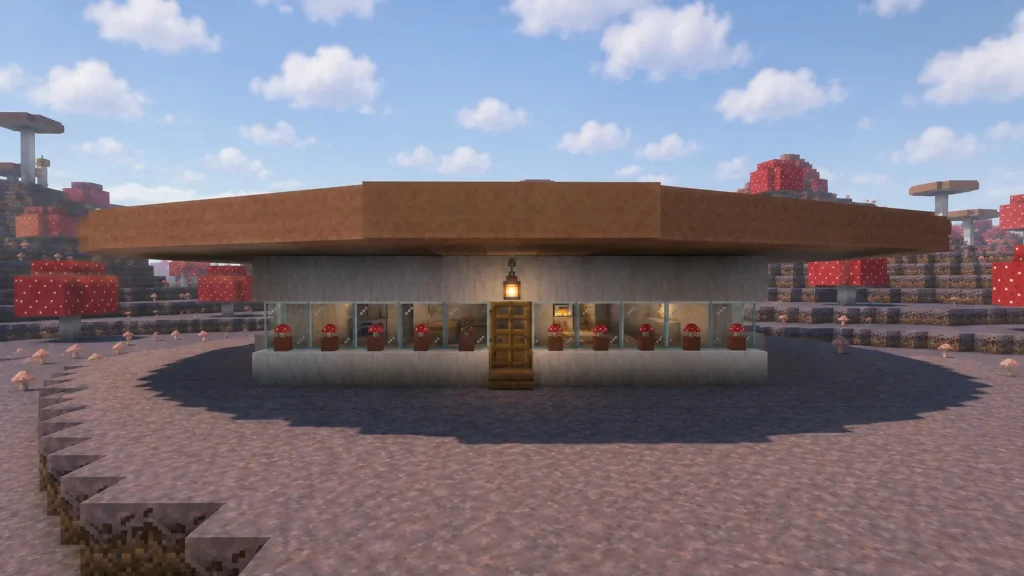
7. Brown Mushroom Bungalow
Where the red cap goes tall and domed, the brown mushroom spreads wide and flat, so this one is a low, sprawling single-floor home under a broad umbrella roof.
Use mushroom stem for the walls, brown mushroom block for the wide flat cap, and a mycelium floor inside. Ring the base with glass panes for a full band of windows, and set flower pots of red mushrooms along the front sill.
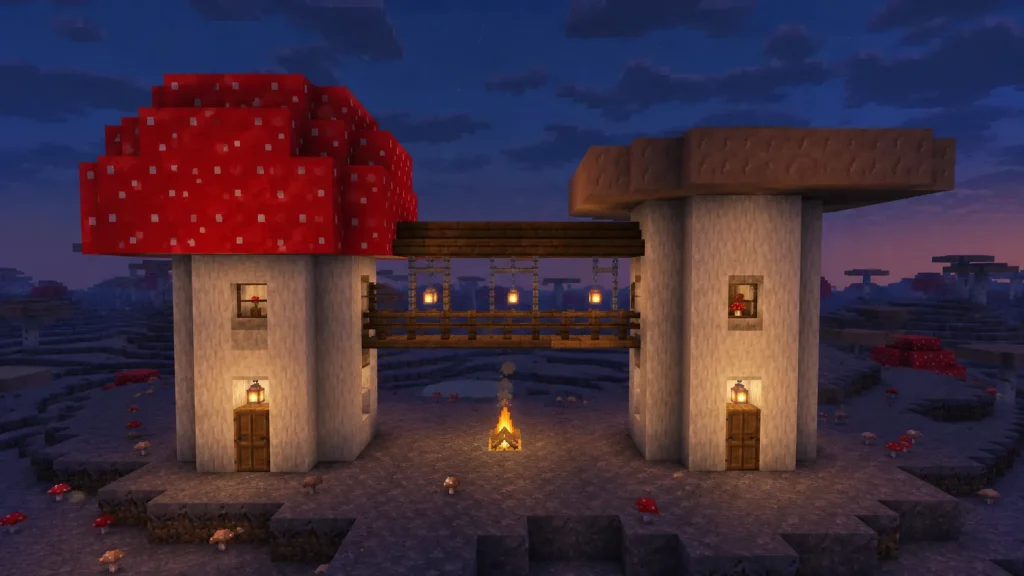
8. Twin-Cap Mushroom Duplex
Two mushroom houses joined at the stem — one red cap, one brown — linked by a short covered walkway. It looks like two toadstools that grew into each other.
Build both stems from mushroom stem, cap one in red mushroom block and the other in brown, and bridge them with a spruce plank walkway roofed in spruce slabs. Line the connecting path with lanterns on chains and add a shared campfire below.
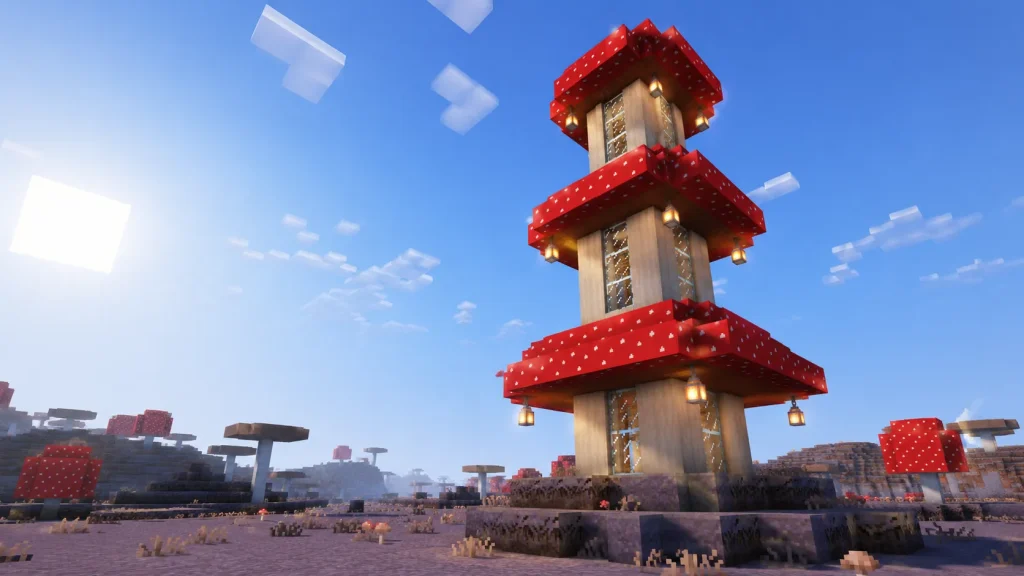
9. Stacked Mushroom Tower Home
Three mushroom caps stacked up a single stem like a tiered pagoda, each cap sheltering one floor. It reads as one tall, wobbly toadstool tower.
Run one continuous mushroom stem column up the center, flare a red mushroom block cap out at each of the three levels, and connect the floors with a spruce ladder inside. Cut glass pane windows under each cap and hang a lantern beneath every overhang.
Make each cap a block or two wider than the one above so the overhangs read as separate tiers instead of one blurry shape.
10. Underground Stem Root Cellar Home
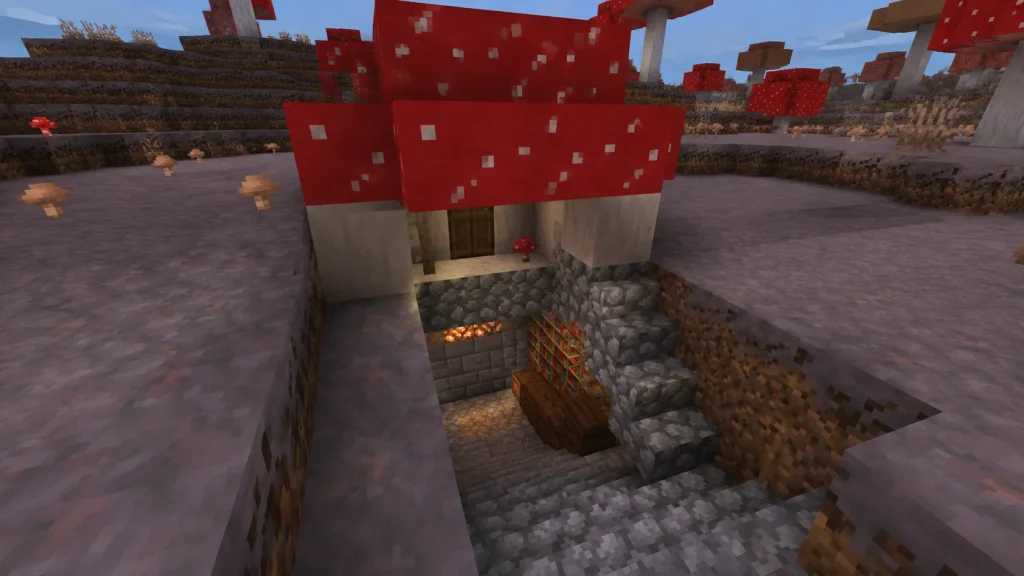
This flips the idea and goes down. The visible part is a small mushroom-cap entrance, but the real home is a cellar dug beneath the mycelium.
Cap the surface entry in red mushroom block over a short mushroom stem porch, then descend a cobblestone stairwell into a room walled in mushroom stem and stone bricks. Light the cellar with shroomlight in the ceiling and line one wall with barrels and bookshelves.
Cozy Cottagecore Retreats
11. Mycelium Meadow Cottage
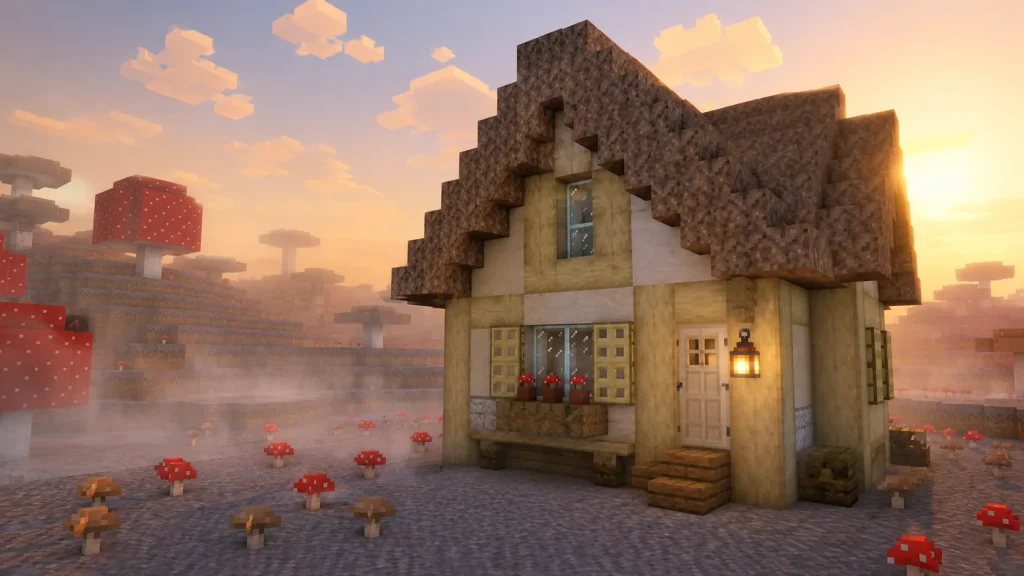
A soft, storybook cottage sitting right out on the open mycelium with no digging in. The whole thing is built to look grown rather than constructed.
Frame it in stripped birch logs with white terracotta infill walls, and pitch a steep gabled roof in brown mushroom block for a mottled, thatch-like look. Add birch trapdoor shutters, glass pane windows, flower pots with red mushrooms, and a lantern beside a birch door.
The brown mushroom roof is the trick here — it gives the fuzzy, organic cottage-thatch texture without needing any wood.
12. Glow Lichen Reading Nook Cabin
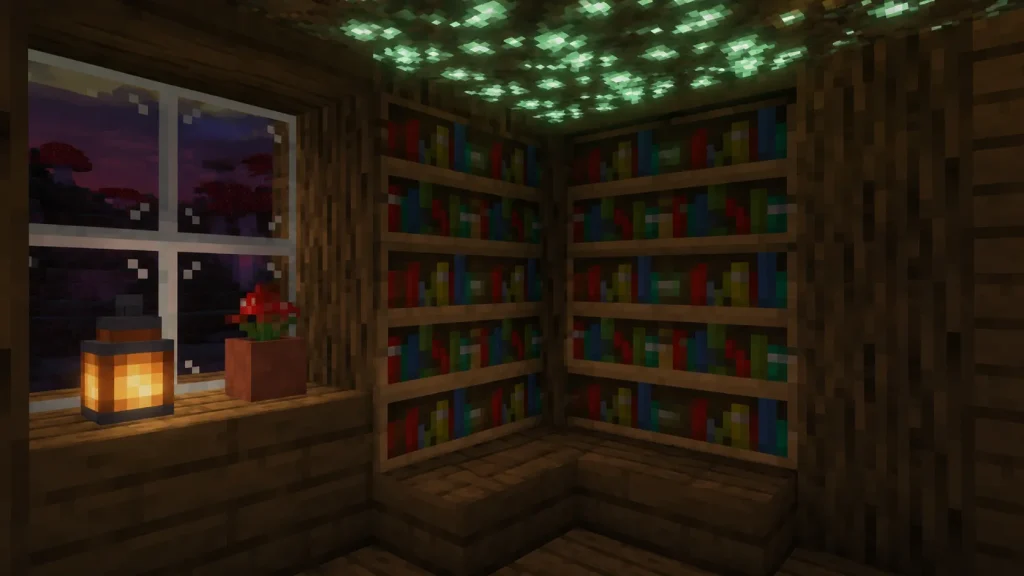
A tiny one-room cabin built around a single bright reading corner. It’s small enough to finish in an evening and cozy enough to want to.
Build the walls in spruce planks with spruce log corners and a spruce stair roof. Fill one interior corner with bookshelves, drape glow lichen across the ceiling above it for soft ambient light, and set a lantern and a flower pot on the windowsill.
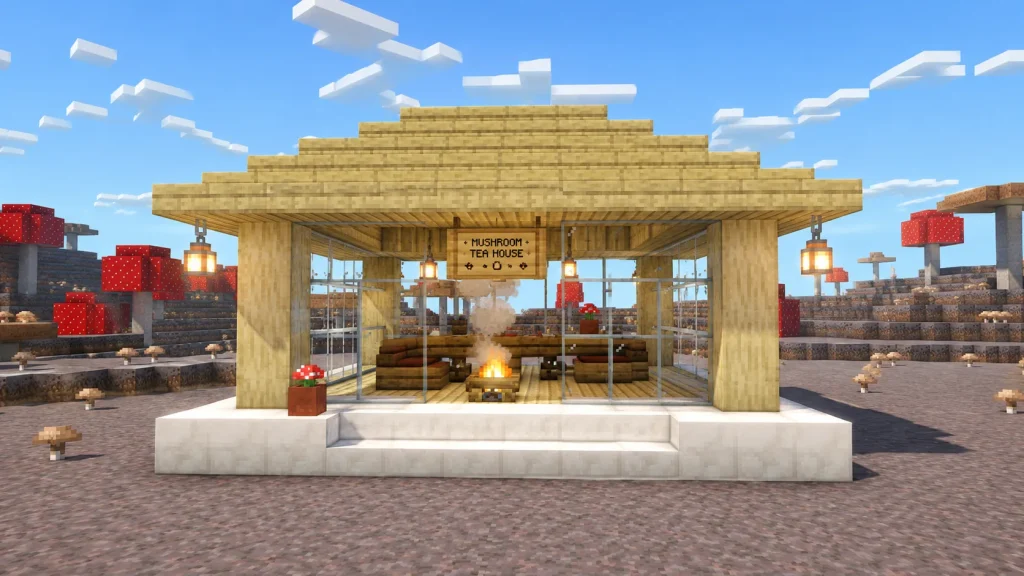
13. Pale Oak and Calcite Tea House
An airy, pale little pavilion meant for looking out over the mycelium, not hiding from it. Lots of glass and light colors keep it feeling open.
Use pale oak planks and stripped pale oak log posts, with calcite for the low base and a white, clean footing. Roof it in pale oak stairs, wall it mostly in glass panes, and set a campfire under a hanging sign out front with lanterns at the eaves.
14. Sunken Mushroom Garden Cottage
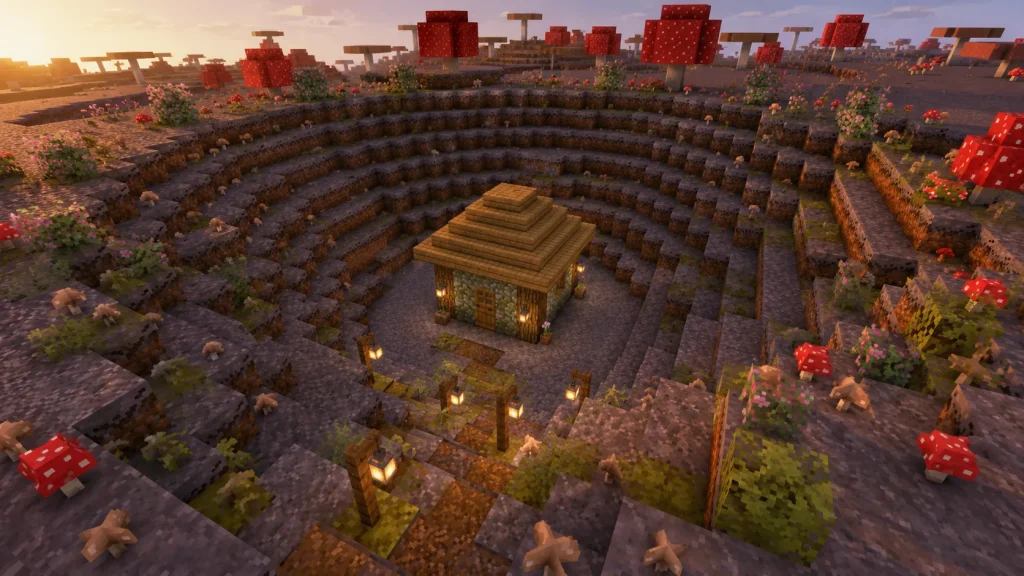
A cottage set a couple of blocks down into a dug-out mycelium hollow, so it sits inside its own little sheltered garden bowl. The sunken layout makes even a small yard feel enclosed.
Build the walls in oak planks and mossy cobblestone, roof in oak stairs, and terrace the surrounding hollow with mycelium and podzol steps. Plant red and brown mushrooms, moss carpet, and azalea around the rim, and light the path with lanterns on fences.

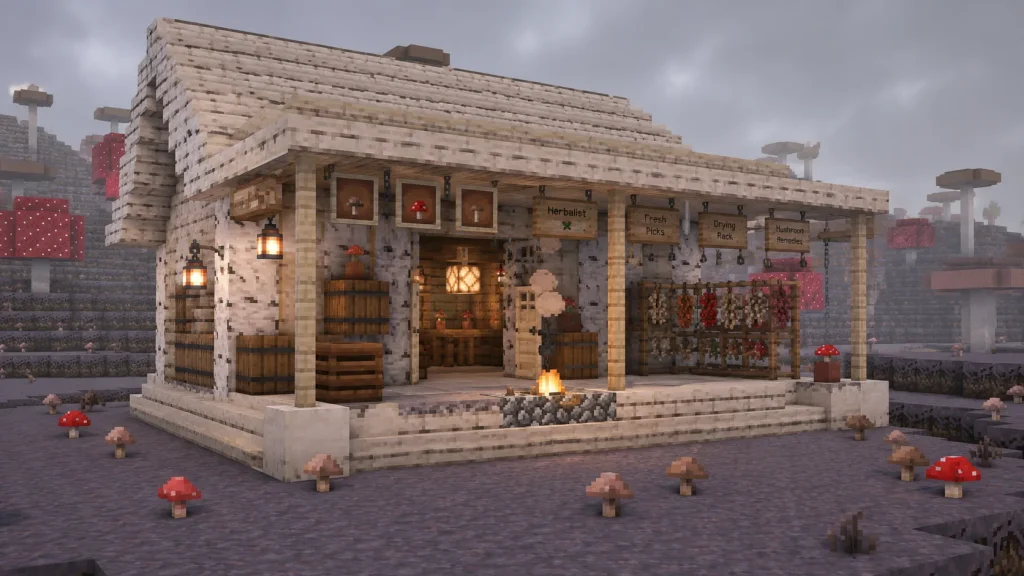
15. Birch-Frame Herbalist’s Cottage
A working cottage for someone who brews and grows things, with drying racks and a potion corner worked into the look. It feels busy and lived-in.
Frame it in birch logs with mushroom stem infill walls and a birch stair roof. Hang item frames of mushrooms and hanging signs along the porch, line a shelf with barrels and a composter, and light the interior with a mix of lanterns and one shroomlight over the work table.
Whimsical and Fairytale Builds
16. Toadstool Village Cluster
Not one house but a little cluster of five small toadstool huts sharing a central mycelium clearing. Each hut fits one player’s worth of essentials, so it works as a base with friends.
Build each hut with a short mushroom stem body and a red mushroom block cap, sized just two or three blocks across. Connect them with moss carpet paths, ring the shared clearing with lanterns on fences, and drop a big campfire and a few flower pots in the middle.
17. Spotted Cap Gnome House
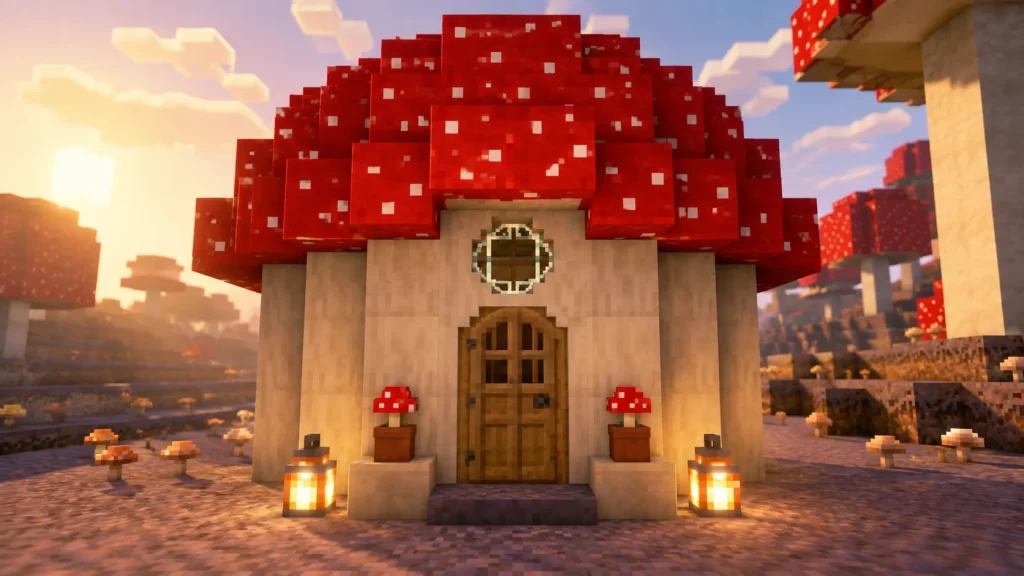
A squat, round-faced little house that looks like it belongs to a garden gnome. The whole build is about the classic red-and-white toadstool silhouette.
Make the base a round mushroom stem drum, dome the roof in red mushroom block, and cut a single arched oak door with a round glass pane window above it. Flank the door with two flower pots of red mushrooms and set a lantern low on either side.
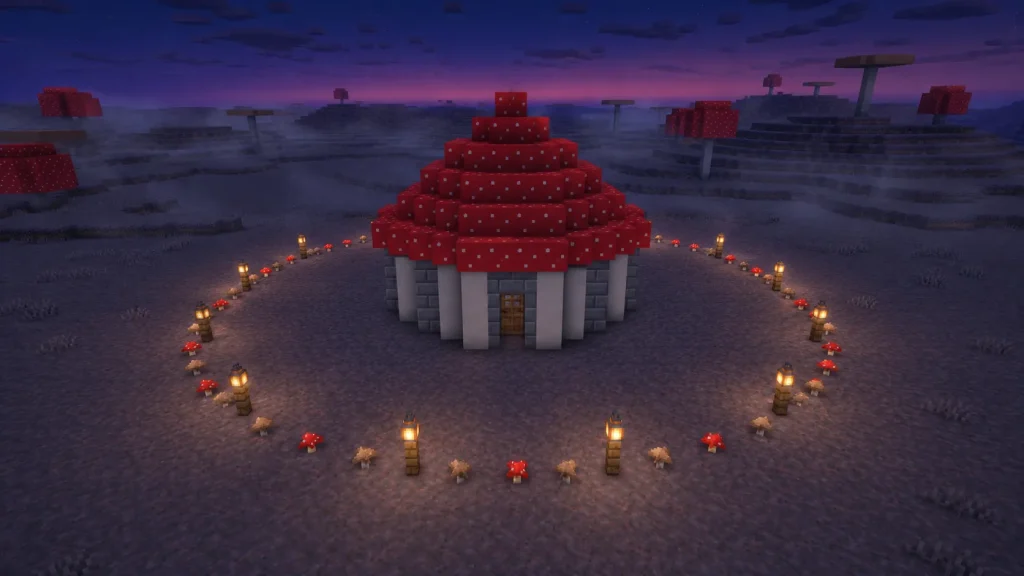
18. Fairy Ring Roundhouse
A circular home ringed by a real fairy ring of mushrooms, playing off the old folklore. The round footprint is unusual enough to stand out from every square base.
Build a cylindrical wall of stone bricks and mushroom stem, top it with a conical red mushroom block roof, and floor the inside with mycelium. Plant a full circle of alternating red and brown mushrooms around the outside, with lanterns on fence posts spaced between them.
For the round wall, step the blocks in a rough octagon and let the mushroom stem texture blur the corners — it reads as a circle from a distance.
19. Crimson Fungus Wizard’s Study
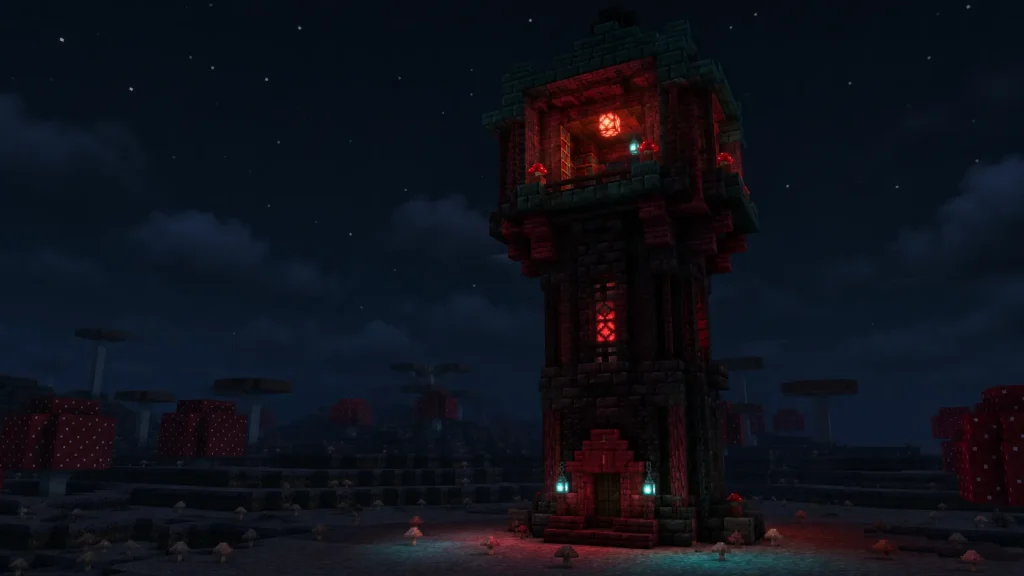
A darker, weirder tower for a build that wants magic-flavored menace. Crimson brings in deep reds that the vanilla mushroom blocks can’t.
Build a slim tower of blackstone and crimson stem, with crimson planks flooring and a warped stair reading loft up top. Wall the study in bookshelves, light it with shroomlight and one soul lantern, and hang crimson fungus in flower pots along the window ledges.
20. Warped Grotto Fungal Manor
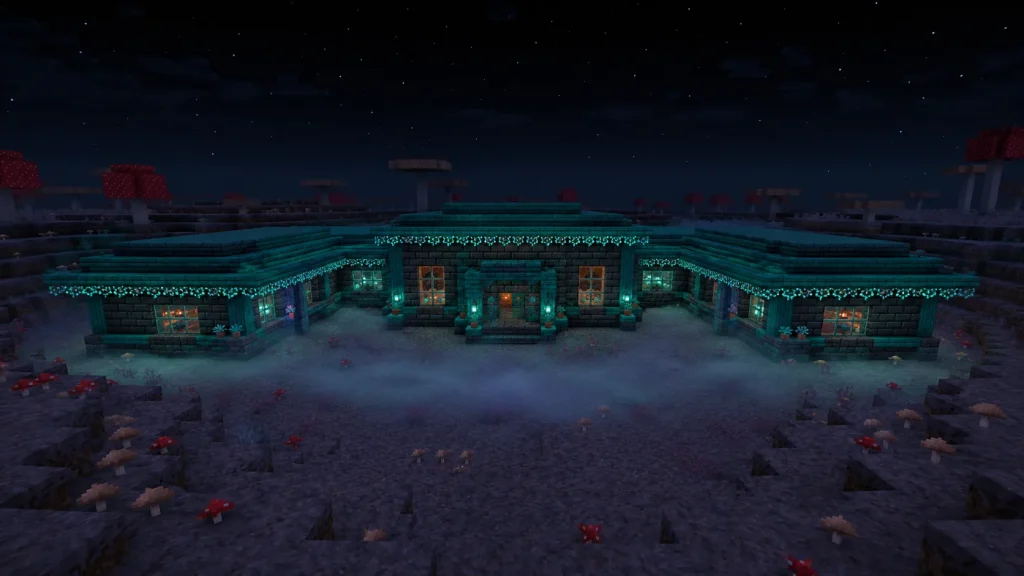
A larger manor built low into a mycelium hollow, glowing teal from warped fungus and blues where the red-mushroom builds glow warm. It’s the eerie counterpart to the cottagecore section.
Frame it in warped stems and warped planks, wall it in deepslate bricks, and roof the wings in warped stairs. Run glow lichen along the eaves, place warped fungus in pots, and light the interior with a scatter of shroomlight and warped-toned sea lanterns.
Elevated and Unusual Structures
21. Stilted Mushroom-Cap Treehouse
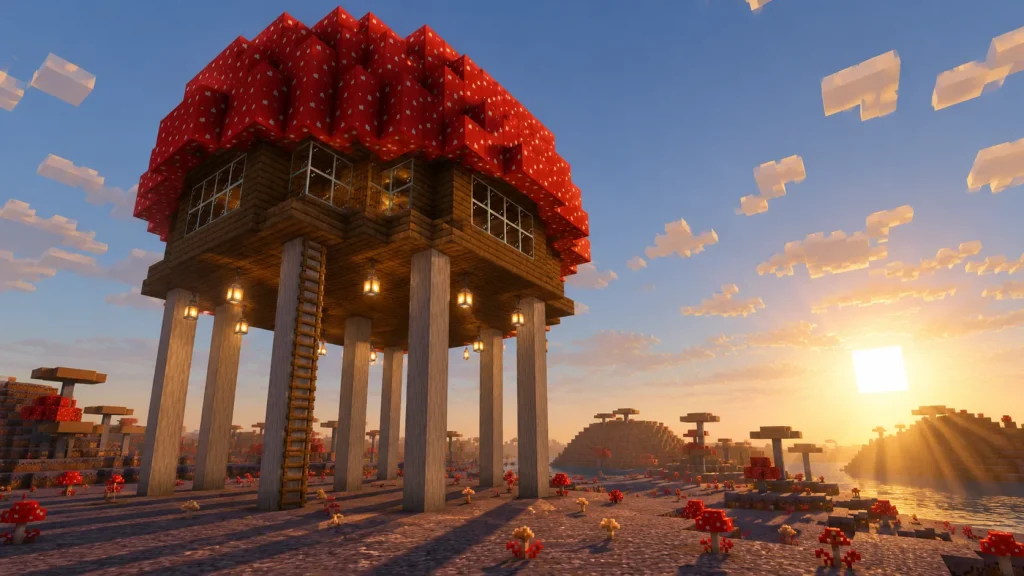
A home raised on stilts above the mycelium, capped by a giant mushroom roof so it looks like a treehouse growing on a stalk. Getting it off the ground gives you a clear view over the flat biome.
Raise the platform on mushroom stem stilts, floor it in spruce planks, wall it in spruce planks with glass panes, and cap the whole thing in a red mushroom block dome. Add a spruce ladder up one stilt and hang lanterns under the elevated floor.
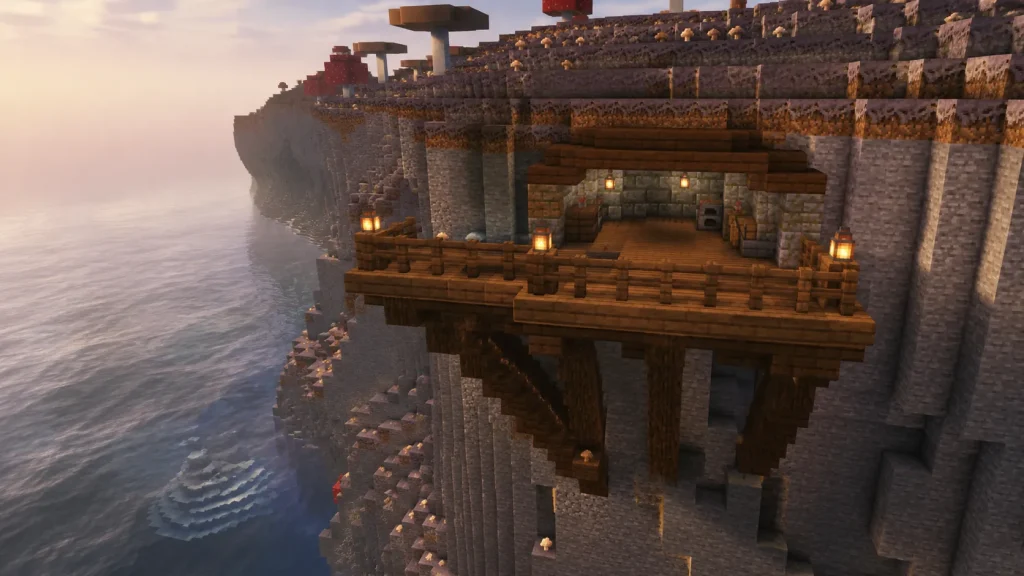
22. Cliffside Mycelium Overlook
Mushroom Fields sometimes generates as steep island cliffs, and this build clings to that edge with a cantilevered deck hanging over the drop. The overhang is the whole point.
Cut the home into the cliff with stone brick and mossy cobblestone walls, extend a spruce plank deck out past the edge on stripped spruce log supports, and rail it in spruce fences. Roof the tucked-in room in spruce stairs and light the deck with lanterns on the rail posts.
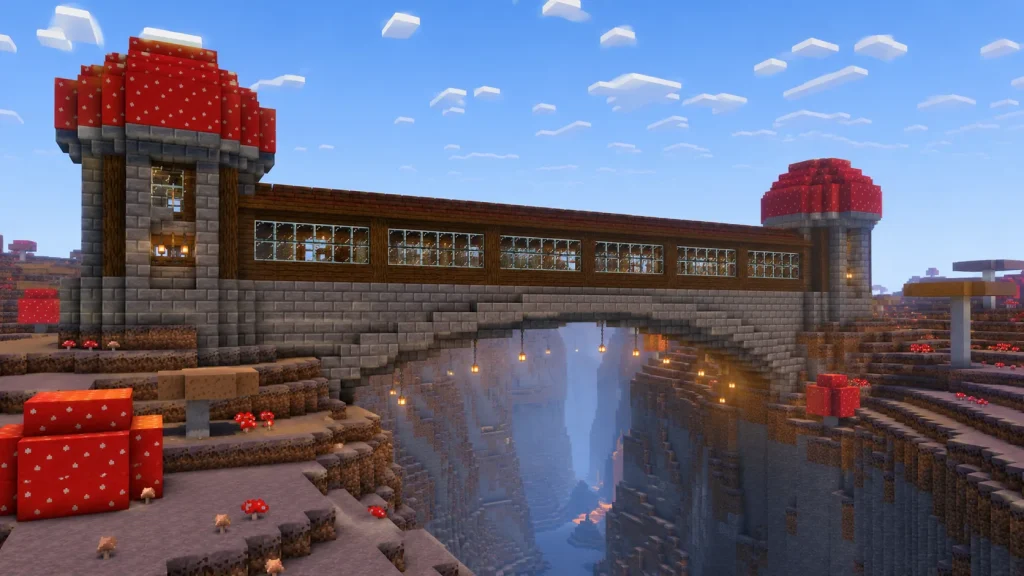
23. Mushroom Bridge House
A home built across a gap or small ravine, spanning it like an inhabited bridge. Two giant mushroom caps anchor each end and the living space runs between them.
Build a stone brick arch across the gap, run a spruce plank corridor home along the top, and cap each end tower in red mushroom block. Line the bridge span with glass pane windows on both sides and hang lanterns beneath the arch.
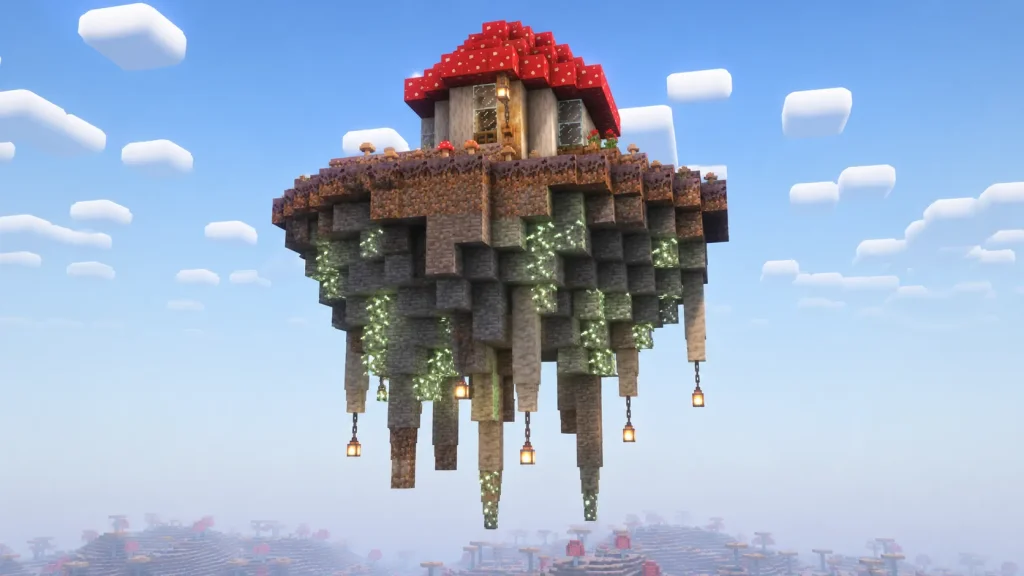
24. Floating Spore Island Home
A creative-mode showpiece — a chunk of mycelium terrain floating in the air with a mushroom home on top and roots trailing beneath. It leans hard into the biome’s dreamlike feel.
Shape the floating island from mycelium and stone over a base of hanging mushroom stem “roots,” and build a compact red mushroom block cottage on the surface. Drape glow lichen down the underside, add glass pane windows, and light the roots with a few dangling lanterns on chains.
Keep the underside irregular and let the stem roots taper to single blocks — a flat bottom kills the floating illusion instantly.
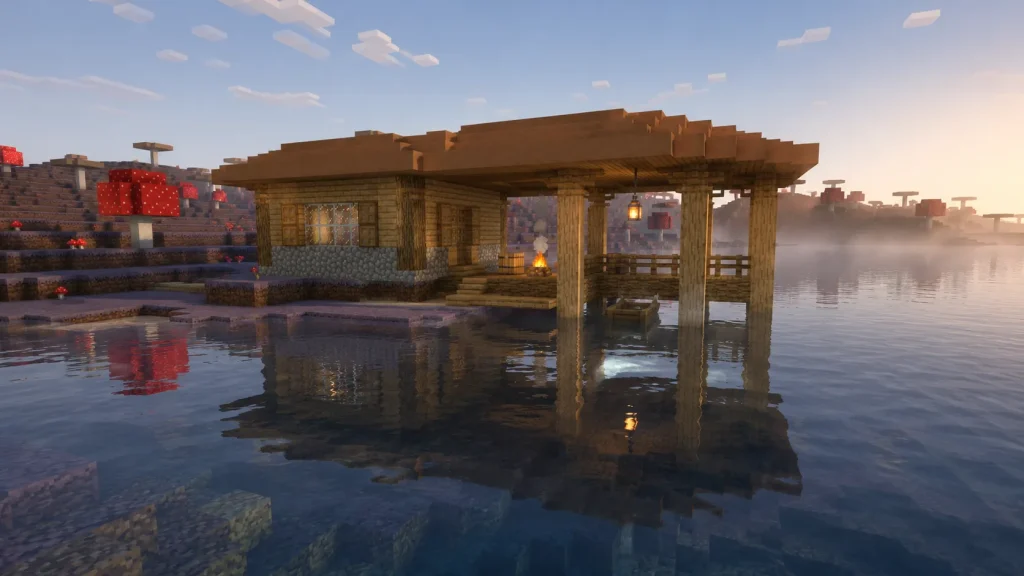
25. Lakeside Mushroom Boathouse
A waterside home with a covered slip for a boat, built where the mycelium meets a lake or the ocean edge. Half of it sits over the water on posts.
Build the land side in oak planks and cobblestone, extend a covered boat slip out over the water on stripped oak log posts, and roof both under a shared brown mushroom block cap. Add oak trapdoor shutters, a lantern at the dock, and a barrel and campfire on the deck.
Grand and Statement Builds
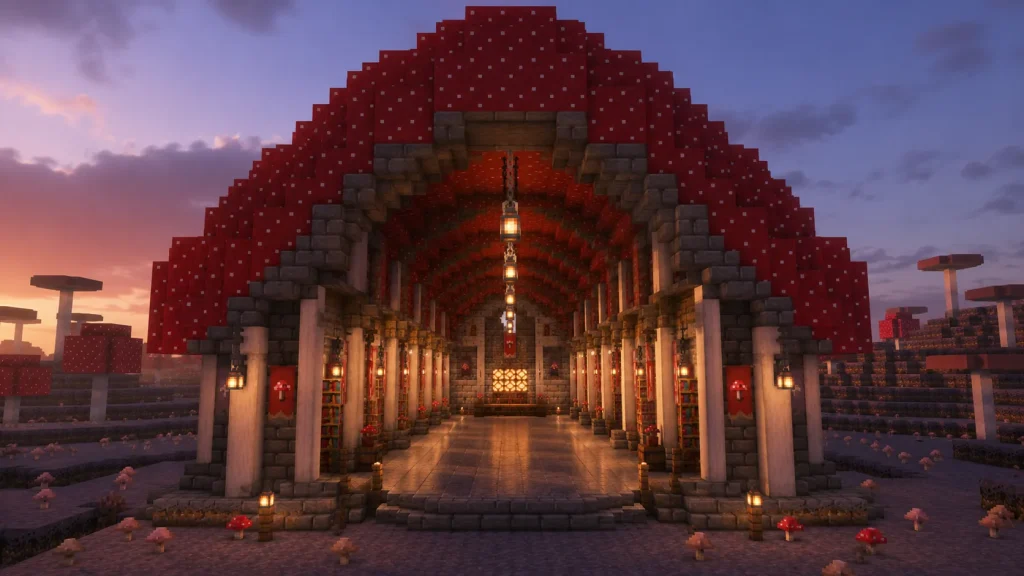
26. Great Mushroom Hall
A long, tall hall for a main base or a shared server home, roofed by one enormous mushroom cap running its full length. It’s meant to feel like a fungal great hall.
Raise stone brick walls with mushroom stem pillars down both sides, span the roof in a continuous red mushroom block vault, and floor it in polished andesite. Fill the interior with bookshelves and banners, line the aisle with lanterns on chains, and light the far end with shroomlight behind the head table.
27. Mycelium Manor Estate
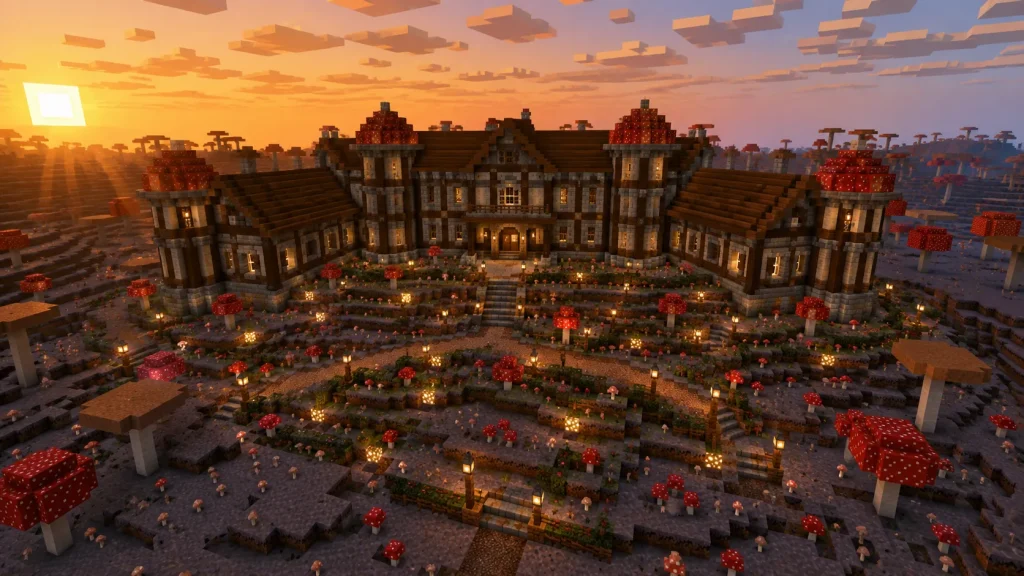
The full statement build — a multi-wing manor sitting on landscaped mycelium grounds, tying together the whole biome palette into one estate. This is a long-term project rather than a starter.
Build the main house in stone bricks and stripped spruce log framing with mushroom stem accent walls, roof the wings in brown mushroom block gables, and add red mushroom block dome towers at the corners. Terrace the grounds with podzol and mycelium, plant giant and small mushrooms throughout, and light the paths with lanterns on fences and shroomlight in the garden beds.
Whether you’re squeezing a first-night burrow into a mycelium hill or spreading a full manor across the grounds, the biome does most of the atmospheric heavy lifting — you just have to match your blocks to it. Start with one of the smaller builds to get a feel for the mushroom-block textures, then work your way up to the towers and halls once the palette feels natural. Every idea here is yours to copy, remix, and rebuild in whatever corner of the mycelium you claim.