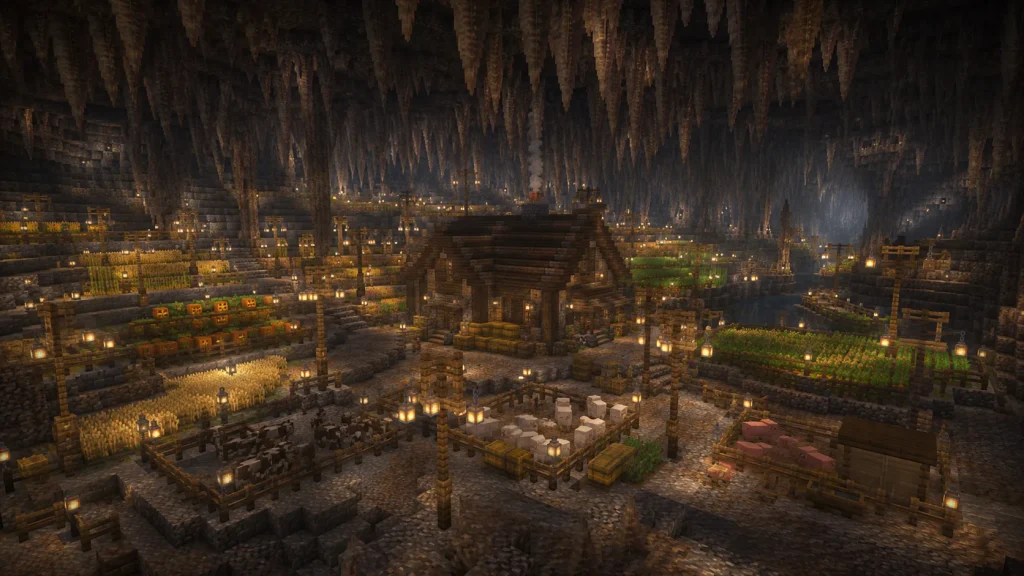
Dripstone caves are one of the most atmospheric places to set up a base, and also one of the most awkward. The ceilings drip, the terrain rises and falls in sharp jags, and pointed dripstone waits to skewer anyone who falls the wrong way. Most players tunnel straight through them on the way somewhere else.
That’s a waste of a great backdrop. The muted browns of dripstone blocks, the tension of stalactites hanging overhead, and the flat white calcite pockets that sometimes cut through the stone give you a color palette and a mood you can’t fake in a plains biome. Build into it instead of past it and the cave does half the aesthetic work for you.
These 23 ideas run from a first-night survival hole to a full cavern-spanning stronghold. Every one uses only real, current blocks, and each comes with a matching in-game screenshot prompt further down so you can picture the exact look before you place a single block.
Beginner-Friendly Dripstone Starter Bases
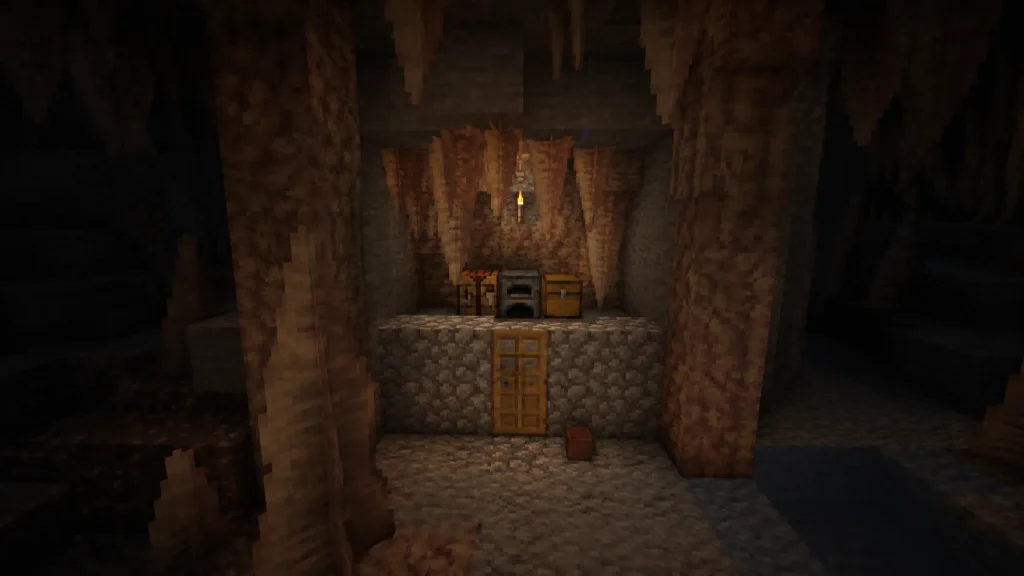
1. First-Night Dripstone Alcove
This is the base you throw together in the first ten minutes underground, tucked into a natural pocket between two dripstone columns. The whole thing is one room wide with a low ceiling, so a single torch lights it fully.
Wall off the open side with cobblestone and set an oak door in the middle. Line the back wall with a crafting table, a furnace, and a single chest, and hang one torch from a dripstone block overhead so the light pools on the floor.
Keep it under 5×4 for the first night. You can always knock the back wall out later and expand into the cavern once you’ve mined some stone.
2. Stalactite Column Loft
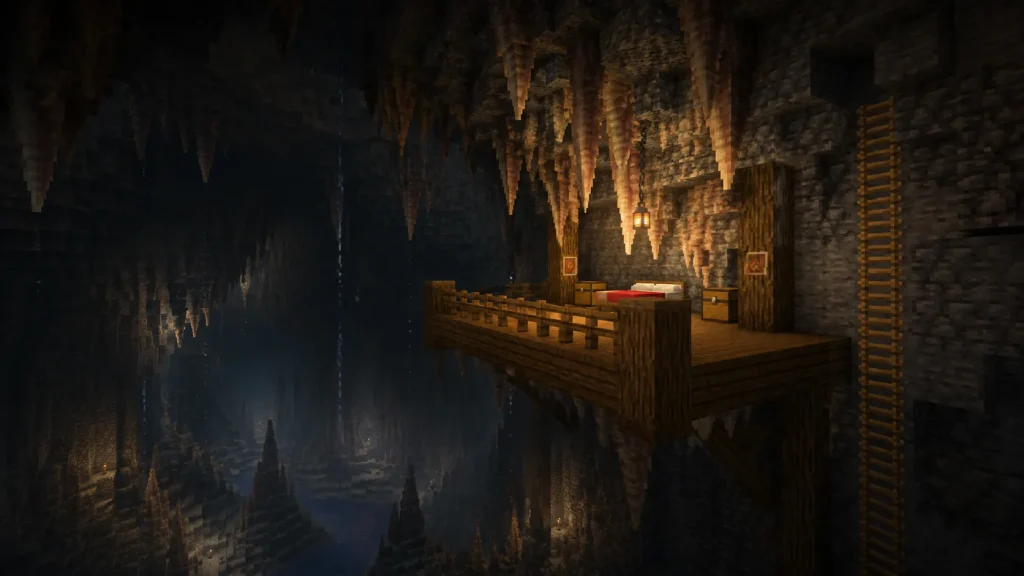
Instead of clearing the pointed dripstone from the ceiling, this base builds around it. You claim a raised ledge partway up the cave wall and turn the overhanging stalactites into a natural ceiling texture nobody else has.
Frame the loft with stripped spruce logs as corner posts and spruce plank flooring, then rail the open edge with spruce fences. A lantern hangs from a chain off one of the real dripstone points above the sleeping area.
Reach it with a ladder up the cave wall. The height keeps mobs from wandering in and gives you a clear view down over the cavern floor.
3. Cobbled Deepslate Bunker
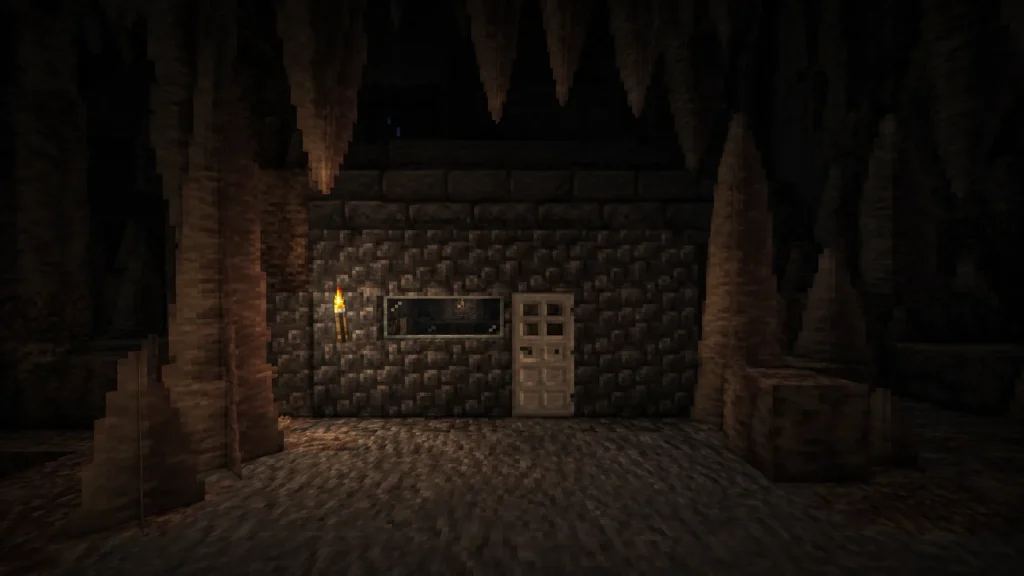
A blocky, defensive little square for players who just want walls and don’t care about frills yet. It reads as a bunker carved into the darkest part of the cave.
Build the walls from cobbled deepslate with a deepslate tile floor, and cap it with a flat deepslate slab roof. A single glass pane slit in the front wall lets you see who’s outside without opening the iron door beside it.
The all-grey palette blends into the surrounding stone, so from a distance the base almost disappears into the cave wall.
4. Tuff Shelf Cabin
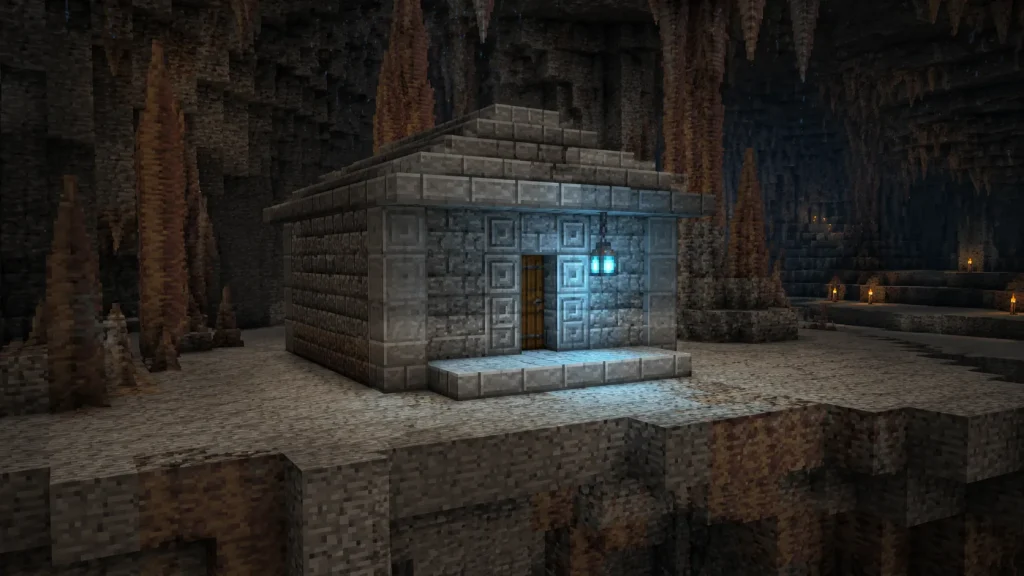
This one uses the newer tuff family to make a small cabin feel deliberate rather than thrown together. It sits on a wide natural shelf where the cave floor levels out.
Walls are tuff bricks with polished tuff corners, the floor is plain tuff, and the roof is tuff stairs pitched into a shallow gable. Chiseled tuff frames the doorway, and a soul lantern on the porch throws a cooler blue light than a normal torch.
Tuff’s grey-with-flecks texture sits nicely against dripstone brown, so the cabin looks like it belongs to the cave without matching it exactly.
5. Dripstone Block Hobbit Door
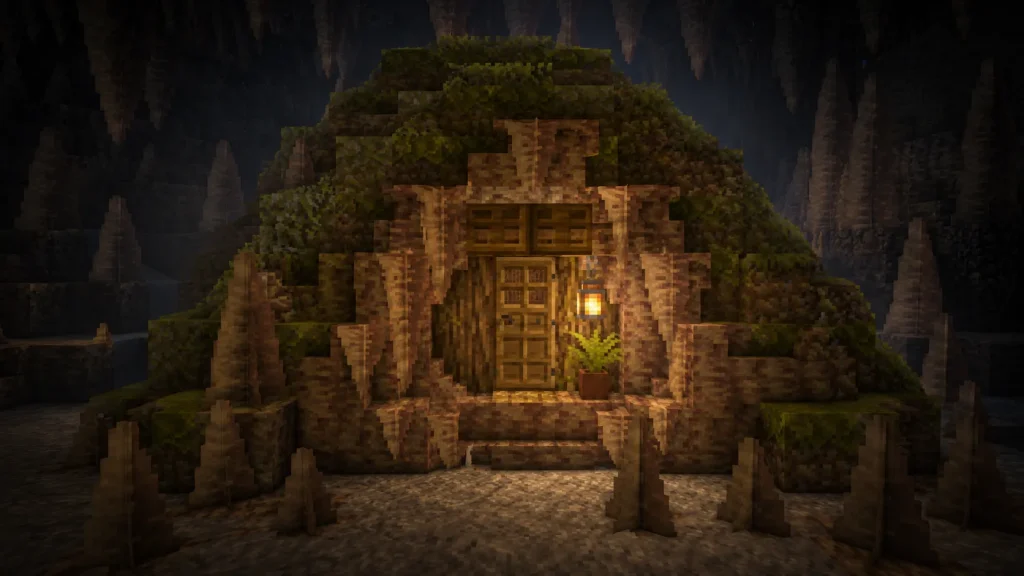
A round-fronted burrow set straight into a sloping dripstone mound, all curve and no straight edges. The face of the mound becomes the front of the home.
Carve the entry as a circle and ring it with dripstone blocks, then fit a single oak door and oak trapdoor “eyebrows” above it. Grass block and moss carpet spill over the top of the mound with a flower pot of a fern beside the step.
Everything behind the door is hollowed out of the existing dripstone, so the build cost is almost nothing beyond the doorway trim.
6. Torchlit Mineshaft Camp
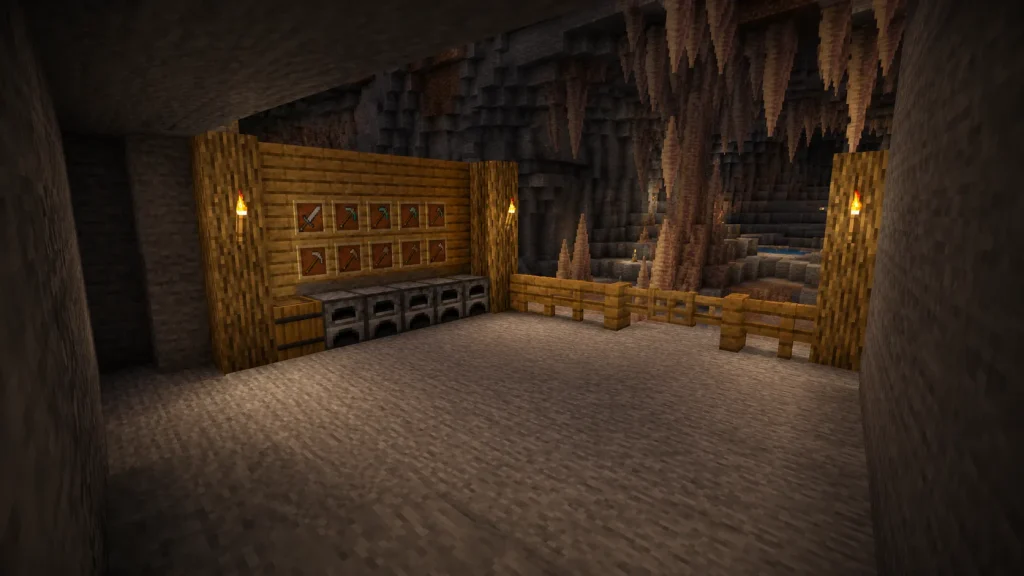
Halfway between a base and a mining outpost, this camp claims the junction where your tunnel meets the natural cave. It’s meant to be functional first and cozy second.
Frame it with oak log posts and oak plank walls on two sides, leaving the cave-facing side open behind a fence gate. A barrel, a furnace row, and a wall of item frames for tool sorting line the back, lit by torches on every post.
Because two walls are just the cave itself, this goes up fast and gives you a staging point deeper mining trips can return to.
Cozy Cave Dwellings
7. Glow Lichen Reading Nook
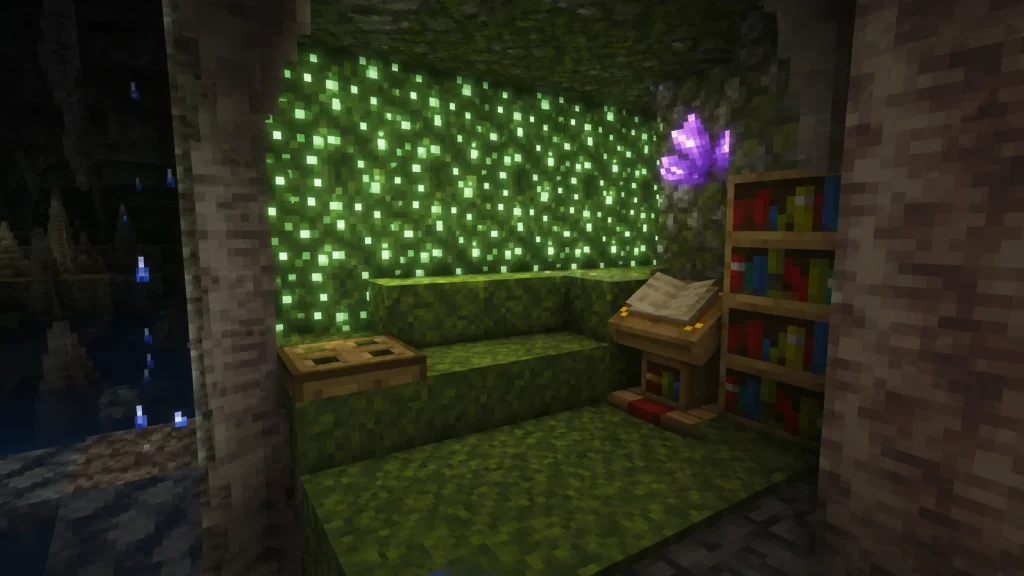
A tiny, soft-lit corner base that leans entirely into the damp, mossy side of dripstone caves. The whole point is a spot that feels calm rather than defensive.
Cover the back wall in glow lichen for a gentle green light, then build the floor and low seating from moss blocks and moss carpet. A bookshelf, a lectern, and a single amethyst cluster on the wall finish the nook, with an oak trapdoor folded down as a small side table.
Glow lichen counts as a light source, so once the walls are covered you barely need lanterns at all.
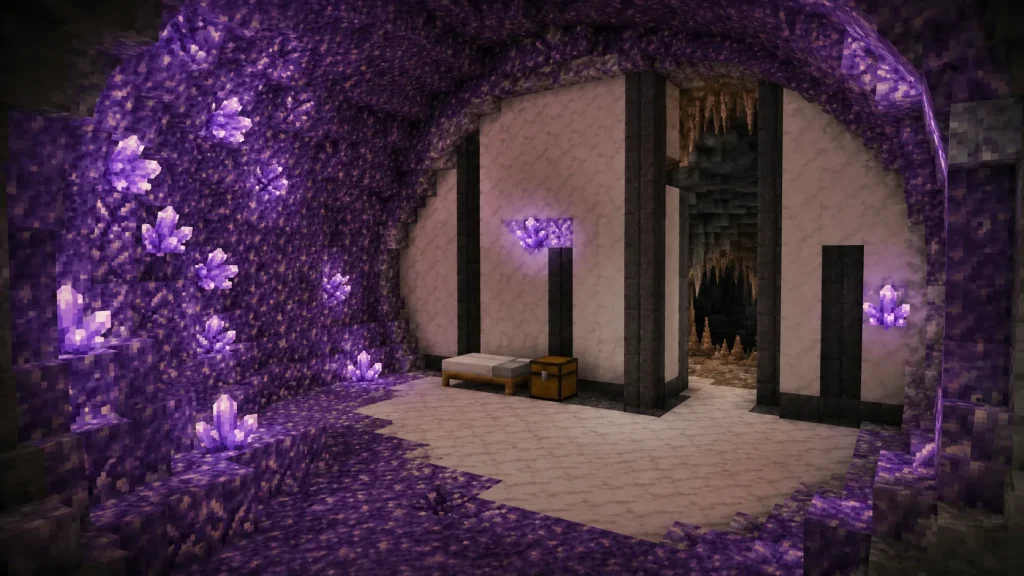
8. Amethyst Geode Home
Built inside or beside an amethyst geode, this base turns the purple crystals into the main decoration. Dripstone caves and geodes often generate close together, so it’s a realistic pairing.
Keep the outer shell as the geode’s natural budding amethyst and amethyst blocks, then build interior partitions from calcite and smooth basalt for a clean pale contrast. Amethyst clusters left growing on the walls double as soft violet lighting.
Leave one wall of the geode exposed and unbuilt so the raw crystal face stays visible from the main room.
9. Sunken Pool Cottage
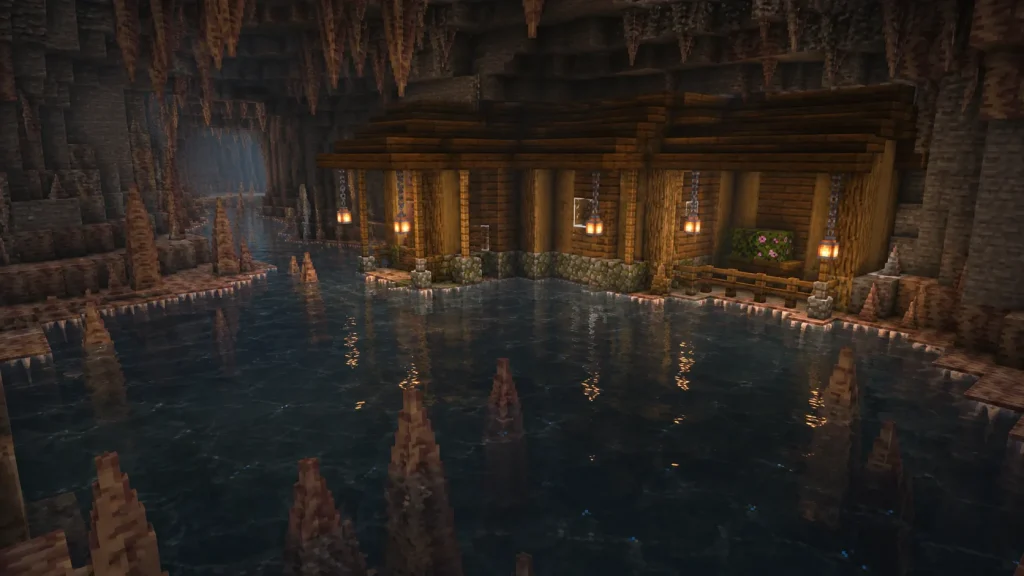
Dripstone caves collect water, and this base makes that a feature by wrapping a small cottage around a natural cave pool. The water becomes the courtyard.
Build the cottage from spruce planks and stripped spruce logs with a mossy cobblestone base where it meets the water, and a spruce stair roof. A dripstone block lip rings the pool, and lanterns hang on chains over the water’s edge.
Pointed dripstone left growing up from the pool floor breaks the water surface and reflects the lantern light nicely.
10. Calcite Vein Loft
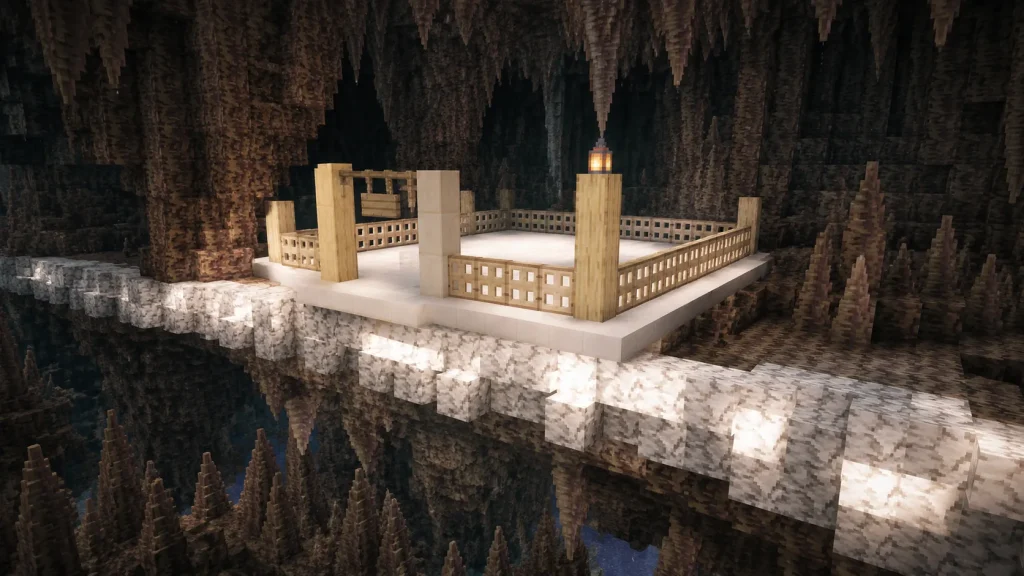
This design hunts for one of the white calcite streaks that cut through dripstone caves and builds a bright, airy loft right on top of it. The contrast does all the work.
Floor and lower walls are calcite and smooth quartz for a crisp white base, framed with stripped birch log posts. A birch trapdoor railing wraps the loft edge, and a hanging birch sign marks the entry.
Against the brown cave, the white loft glows even in dim light, so it needs fewer lanterns than a darker build would.
11. Copper Patina Workshop
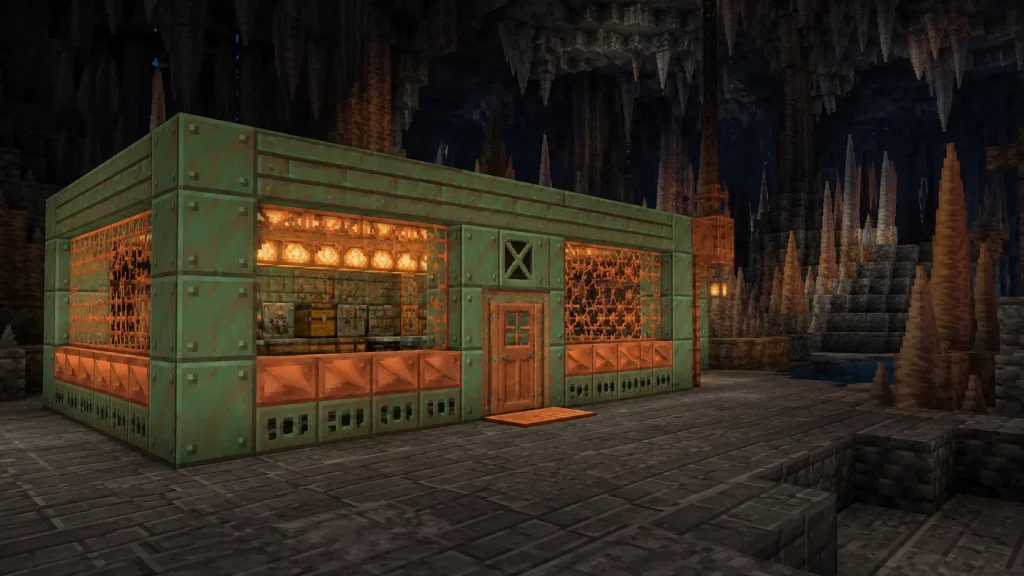
A slightly steampunk cave home that leans on copper’s color as it ages. Pick one oxidation stage and commit so the whole build reads as intentional.
Use exposed copper blocks and cut copper for the walls, a copper trapdoor and copper door on the front, and copper grate windows. Waxed to lock the patina, the teal-brown metal sits warm against grey deepslate floor tiles below.
A row of copper bulbs lights the interior; because they dim as they oxidize, keep these unoxidized and waxed for the brightest, most consistent glow.
12. Mossy Grotto Hideaway
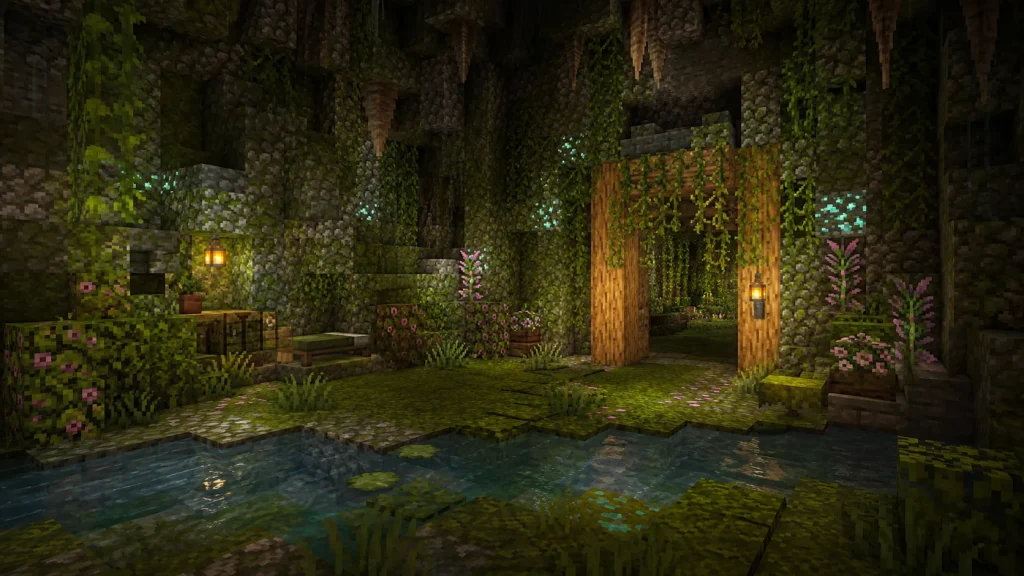
Half garden, half home, built into a naturally wet grotto where water trickles down the walls. This one embraces the overgrown look completely.
Walls are mossy cobblestone and mossy stone bricks, floors are moss blocks with azalea and flowering azalea planted in the corners. Glow lichen and a couple of lanterns light it, and vines trail down over a stripped oak log doorframe.
Let a small stream run through one edge of the floor rather than damming it — the sound and movement sell the grotto feel.
13. Dripstone Chandelier Hall
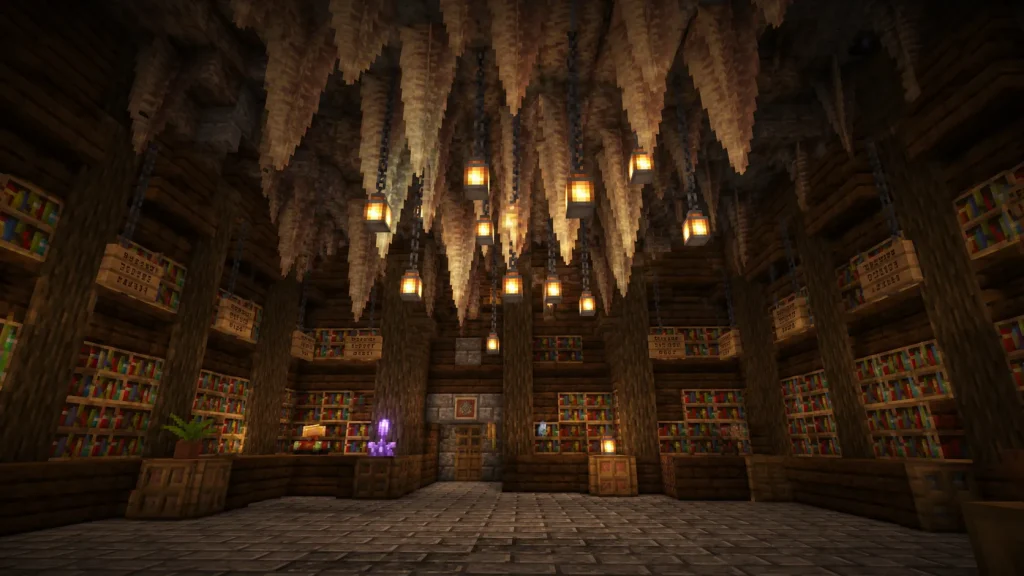
A single grand room that makes the ceiling the star, hanging a chandelier of real pointed dripstone and lanterns over a warm gathering space.
Build the room from dark oak planks and dark oak log framing with a stone brick floor. Suspend chains from the ceiling holding lanterns clustered among left-in-place stalactites, and line the walls with bookshelves and hanging dark oak signs.
Keep the ceiling high, at least five blocks, so the dripstone-and-lantern chandelier has room to hang without feeling cramped.
Grand Cavern Builds
14. Cavern-Spanning Bridge Base
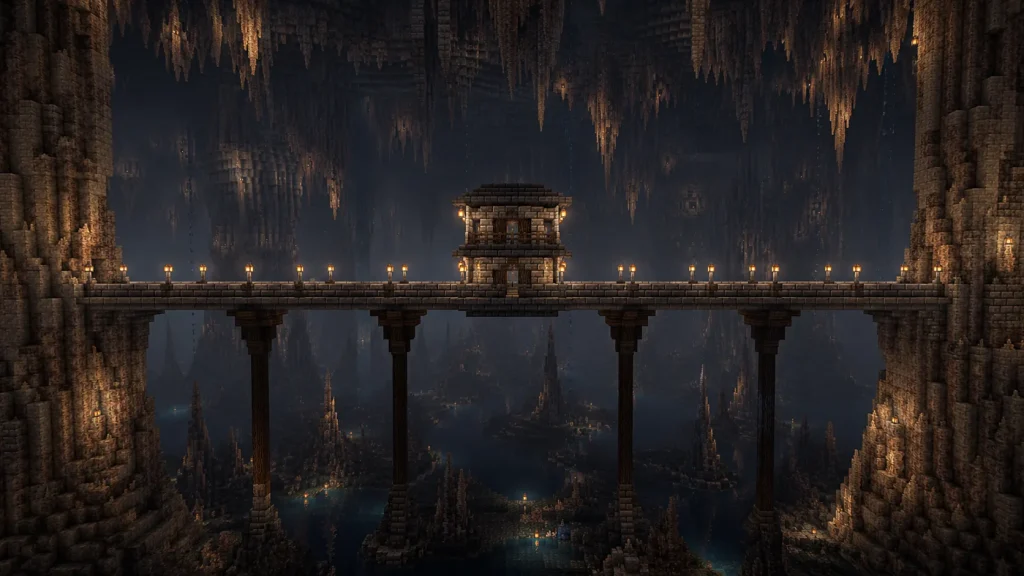
For a huge open dripstone chamber, this base runs a living bridge across the void instead of hugging one wall. The whole structure is the crossing.
Deck the bridge in deepslate brick with stripped dark oak log support beams reaching down toward the floor, and a deepslate brick wall railing. Midway across, a two-story tower of stone bricks and deepslate tiles holds the actual living quarters, lit by lanterns on every post.
Anchor both bridge ends into natural dripstone columns so it reads as growing out of the cave rather than dropped in.
15. Terraced Dripstone Cliffside
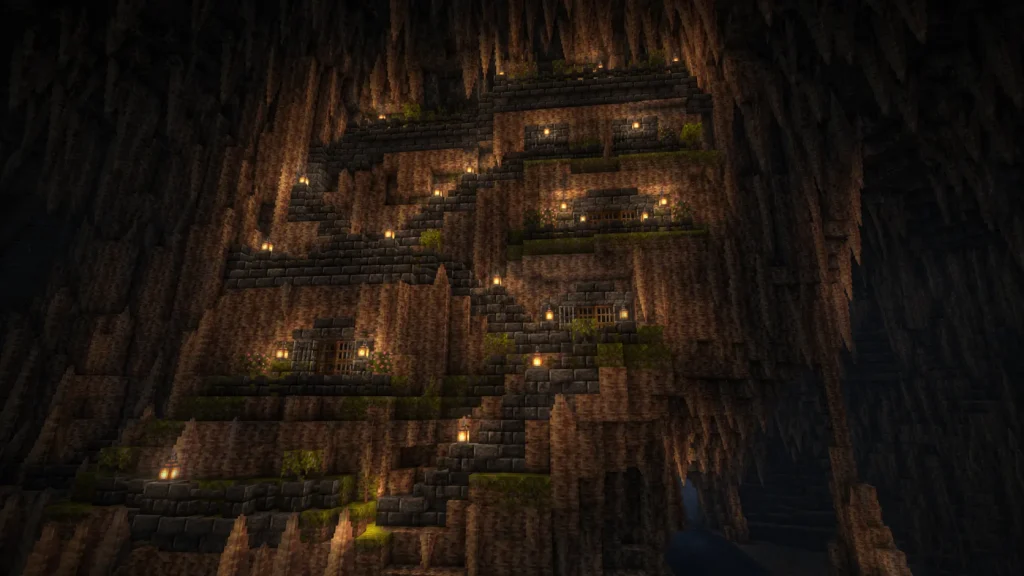
This base climbs a steep cave wall in stacked terraces, each level a separate room connected by outdoor stairs. It suits a cavern with a tall vertical face.
Build the terrace walls from dripstone blocks and cobbled deepslate, floors from deepslate tiles, and rail each level with deepslate walls. Moss carpet and small azalea bushes soften each terrace, with lanterns marking the stair runs between them.
Stagger the terraces so no two line up vertically — the offset makes the cliffside feel carved over time rather than planned all at once.
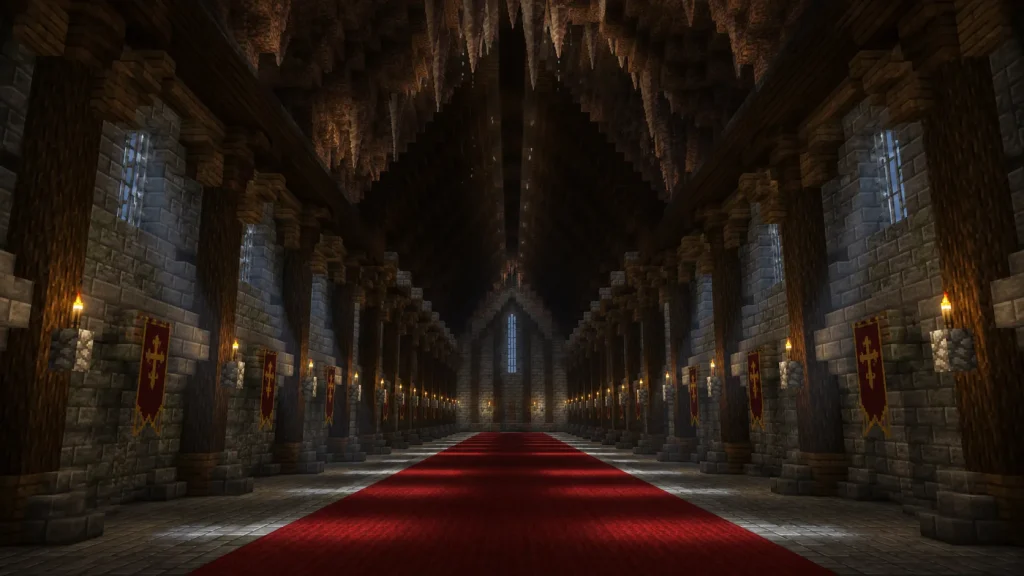
16. Underground Great Hall
A medieval-style hall dropped into the largest chamber you can find, with a high pitched roof and a long central floor. This is a showpiece base.
Frame it in stone bricks with cracked and mossy stone brick mixed in for age, dark oak log pillars down each side, and a dark oak stair roof. Iron bar windows, a red carpet runner down the middle, and banners on the pillars finish it.
Line the roof ridge just under the natural stalactites so the cave ceiling becomes the hall’s true canopy above the built roof.
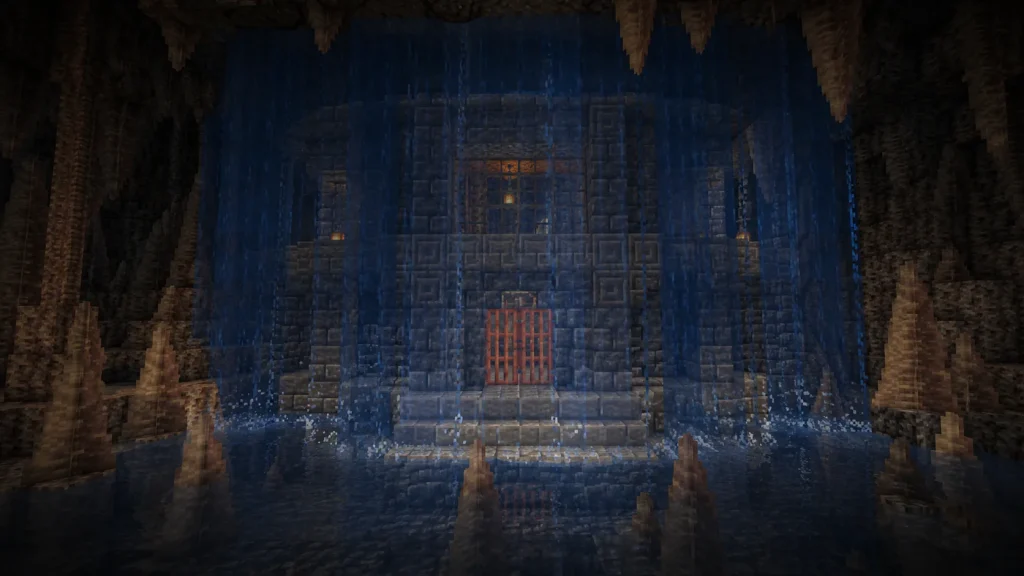
17. Waterfall Curtain Keep
Built behind a cave waterfall so the falling water becomes a moving front wall. Dripstone caverns with ceiling springs are perfect for this.
The keep itself is deepslate bricks and polished deepslate with a chiseled deepslate accent band, tuff brick floors, and a flat slab roof platform. A copper grate gate opens onto a stone brick landing just behind the water sheet.
Position the main window directly behind the waterfall so you look out through the water — the light through it ripples across the interior.
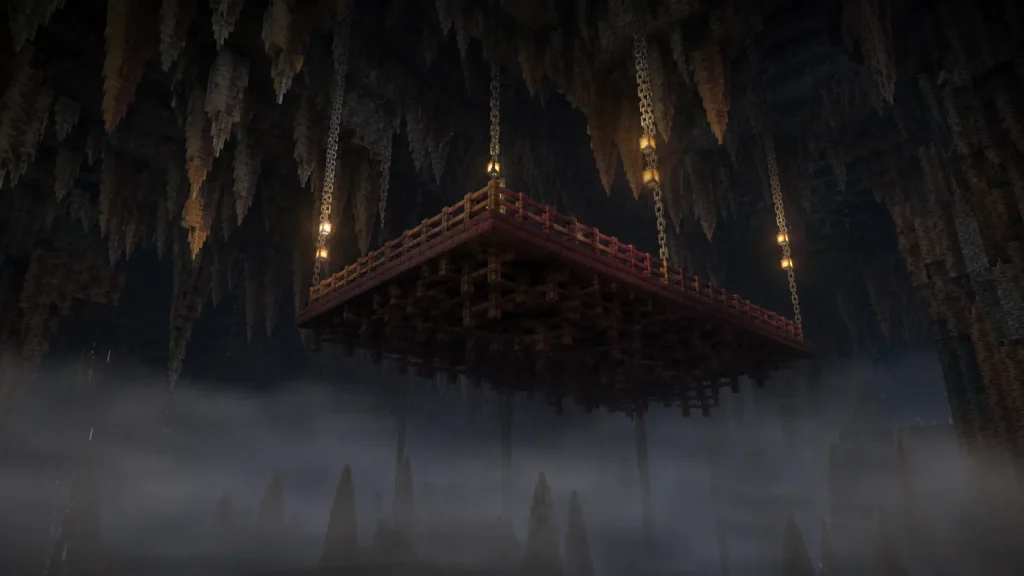
18. Suspended Root-and-Chain Platform
A platform base that appears to hang from the cave ceiling on chains, floating above the dripstone floor below. It’s dramatic and surprisingly buildable.
Deck it in stripped mangrove log and mangrove planks with a mangrove root underside for a tangled organic base, railed with mangrove fences. Chains run from the platform corners up to the ceiling, and lanterns hang from those same chains.
The chains are decorative — the platform is actually supported from below by thin deepslate pillars painted into the shadows so the illusion holds.
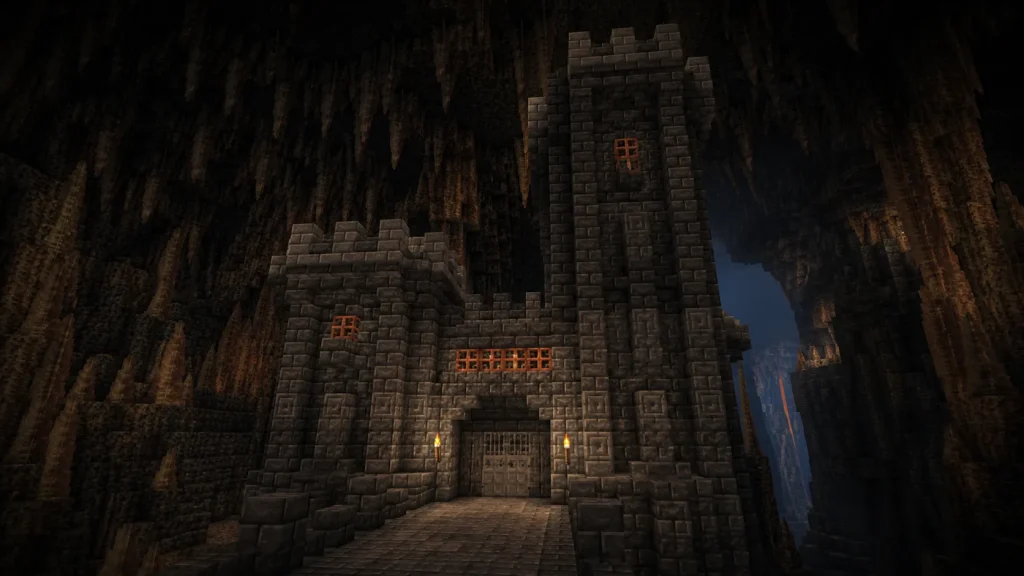
19. Deepslate Fortress Gate
A fortified entrance carved where your cave meets a ravine, all defensive mass and heavy stone. It’s the front door to a larger base beyond.
Build the gatehouse from polished deepslate and deepslate bricks with chiseled deepslate over the archway, twin towers topped with deepslate tile crenellations, and an iron door flanked by torches. Copper grate murder holes sit above the entry.
Keep the two towers slightly asymmetrical in height — a taller and a shorter tower reads as more fortress-like than a perfectly mirrored pair.
Function-First Cave Bases
20. Dripstone Lava Farm Base
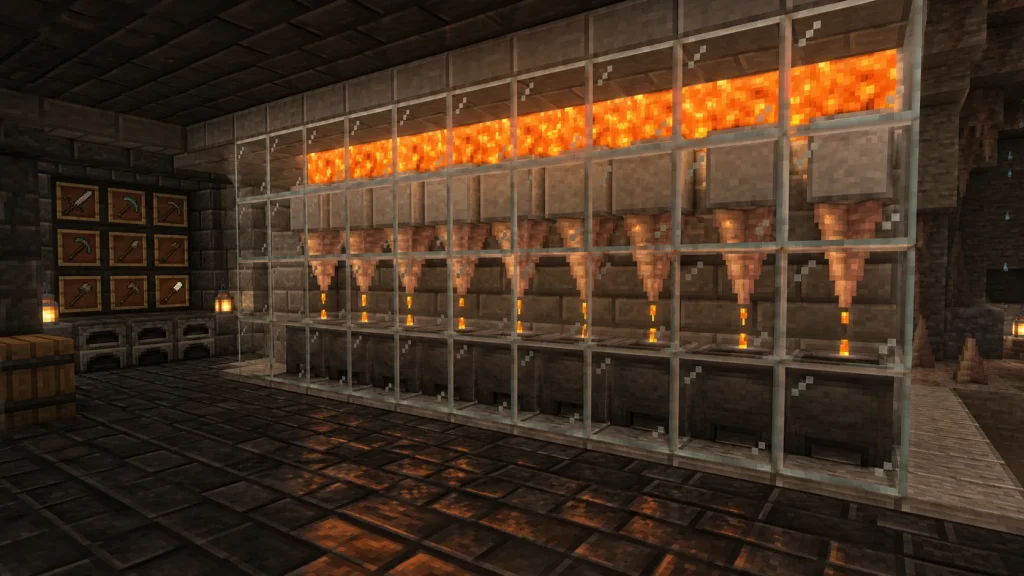
Pointed dripstone placed under a lava source slowly fills a cauldron with lava, and this base builds a home around that renewable farm. Function drives the layout.
House the farm mechanism behind smooth stone and stone brick walls with a deepslate tile floor, and set the cauldron row against one wall under the dripstone drips. A working area of barrels, a furnace bank, and item frames sits opposite.
Wall off the lava side with glass so you can watch the drip fill the cauldrons safely from the living space.
21. Mushroom Grow Cellar
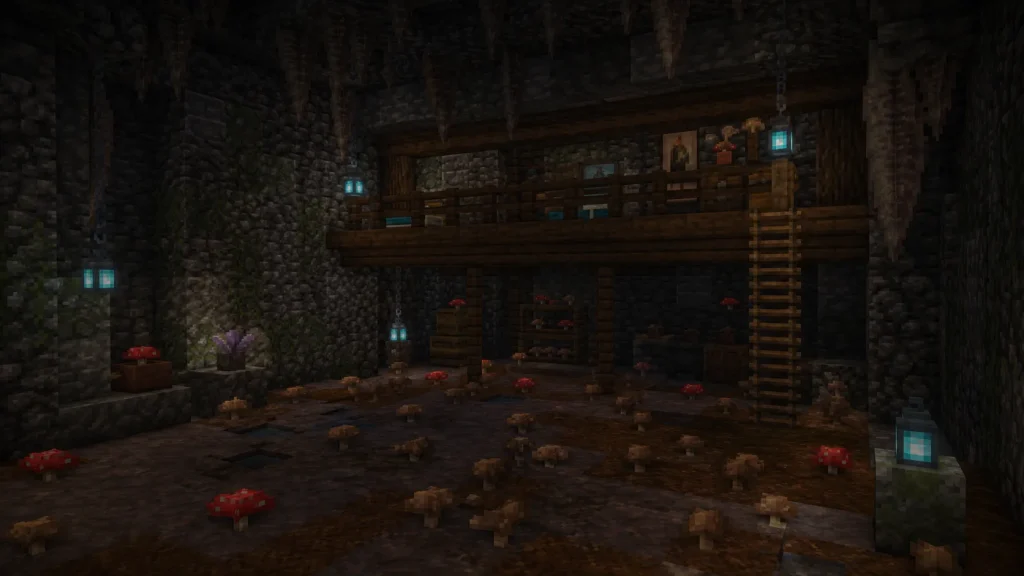
The low light of a dripstone cave is ideal for a mushroom operation, and this base turns that into a working cellar farm with a small living loft above.
Build the cellar walls from cobbled deepslate and mossy cobblestone with a podzol and mycelium floor for the mushrooms, lit dimly by a few soul lanterns. A spruce plank loft with a ladder sits over the grow floor.
Keep light levels low on purpose down here — bright lanterns will stop the mushrooms spreading, so lean on the cave’s natural dark.
22. Central Storage Silo
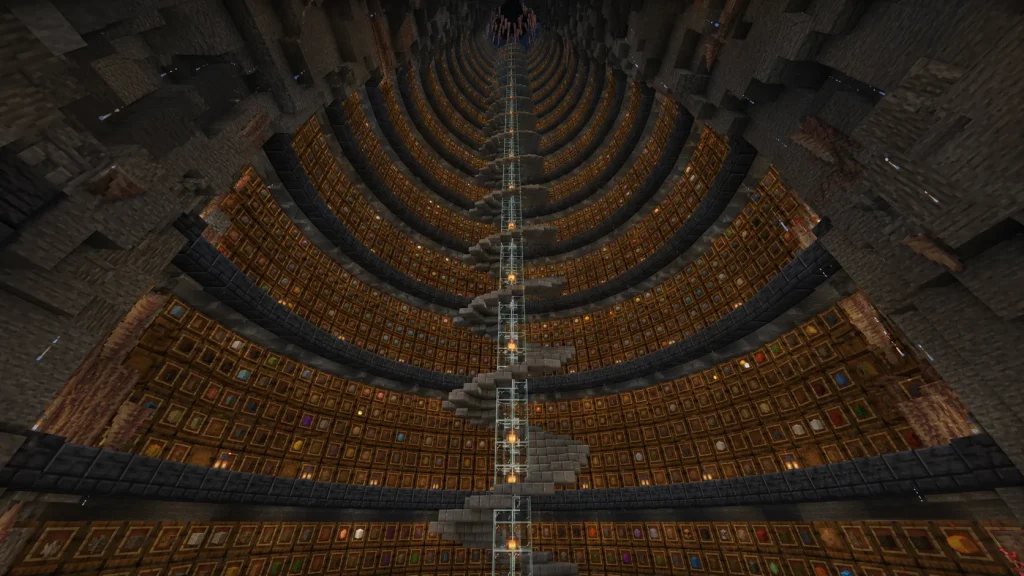
A tall cylindrical storage tower built up through a vertical gap in the cave, with barrels stacked floor to ceiling. Everything else in your base feeds into it.
Build the silo shell from stone bricks with a ring of deepslate brick at each floor level, spiral the interior with stone stairs, and line every wall with barrels labeled by item frames. Lanterns on the central column light each level.
A single glass column running up the middle lets light and sightlines pass between floors so you can spot the level you need from the bottom.
23. Full Cavern Homestead
The endgame build: a whole dripstone cavern converted into a self-contained homestead with a house, farm plots, and animal pens under one stone sky. This ties every earlier idea together.
Center it on a spruce plank and stripped spruce log farmhouse with a spruce stair roof, ring it with hay bale storage and composters, and terrace crop plots of wheat and carrots into the dripstone floor. Fence the animal pens with oak fences and light the whole cavern with lanterns on tall posts.
Leave the biggest stalactites overhead untouched — a homestead lit warm from below with the raw cave ceiling still hanging above is the whole reason to build down here instead of on the surface.
Dripstone caves reward players who slow down and build into the mess instead of flattening it. Whether you stop at the first-night alcove or grind all the way to a full cavern homestead, the drips overhead and the brown-and-white stone give you a setting that a flat grass field never will. Pick the one that matches how deep you’re willing to dig, and let the cave do the rest.